Replika remembered my goals on the paywall (but my coach didn’t)
8 min read · about Replika ·

Replika remembered my goals on the paywall (but my coach didn’t)
Twenty questions, a launch date on the paywall, and a first message that asks what I want.
1 / 32

Written by
Eddy Bogomolov
Growth PM for SaaS
What you'll learn
- A great quiz doesn’t mean the app listened. Replika asked me 20 questions and put my goal and my date on the pay screen. But my coach’s first message asked me what I want.
- Start the first chat from what people told you. For an AI coach, that means the first message knows my goal, my date and my 15 minutes. Every step after the quiz should move me closer to a first useful tip.
- Don’t put a long wait between people and the chat. Replika made me wait three minutes for a 3D avatar. The chat behind it is just text, and every minute gave me another reason to leave.
I tried Replika as an AI career coach. Its quiz asked 20 questions and put my goal on the pay screen. Then my coach said hello and asked what I want.
Replika remembered my goals on the paywall (but my coach didn’t), chapter by chapter
In this story, I’m me: a one-person design consultancy. I want to launch a side hustle by the end of the month. But I keep saying “I’ll start tomorrow.” A coach would help. A human coach costs too much and doesn’t fit my calendar.
So I tried Replika, the AI friend app, as a career coach. I recorded my screen from the App Store to my first useful tip. The quiz was one of the best I’ve seen. But when my coach said hello, he had forgotten almost everything I told it.
What you’ll learn:
- A great quiz doesn’t mean the app listened. Replika asked me 20 questions and put my goal and my date on the pay screen. But my coach’s first message asked me what I want.
- Start the first chat from what people told you. For an AI coach, that means the first message knows my goal, my date and my 15 minutes. Every step after the quiz should move me closer to a first useful tip.
- Don’t put a long wait between people and the chat. Replika made me wait three minutes for a 3D avatar. The chat behind it is just text, and every minute gave me another reason to leave.
Let’s get into it.
1. The intro promises an AI that remembers everything
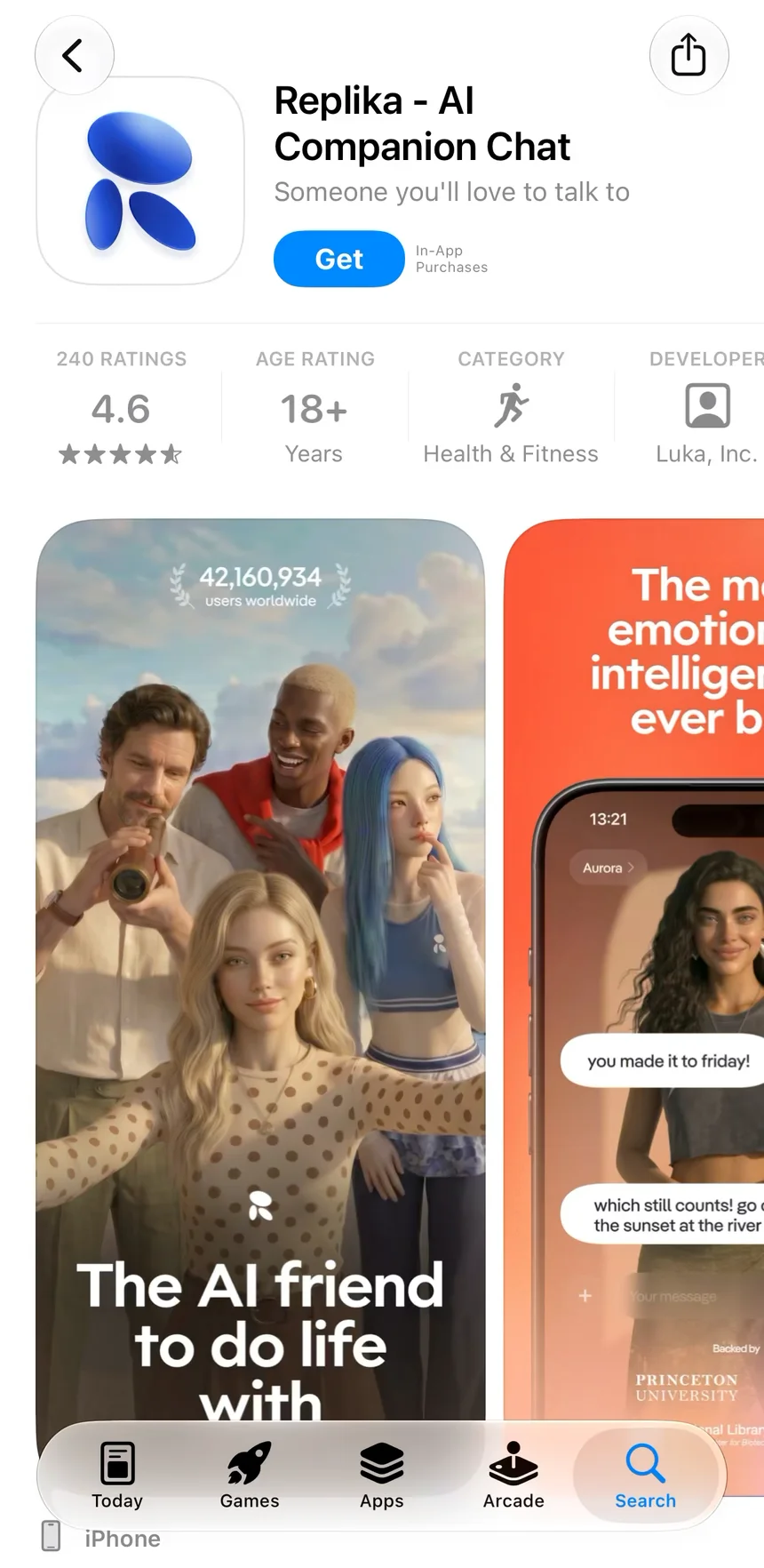
I find Replika on the App Store. “Replika – AI Companion Chat. Someone you’ll love to talk to.” 4.6 stars, 18+, listed under Health & Fitness.
The screenshots sell a friend: “The AI friend to do life with.” “Make them look truly yours.” “Sends you selfies, just because.”
I want someone who keeps me on track. Maybe a friend can do that. I tap Get.
The app opens with a quote:
“Tell me, what is it you plan to do with your one wild and precious life?” — Mary Oliver
Then: “What if there was an AI that really understood you, and helped you become more yourself?”
And then the line that matters most for this story:
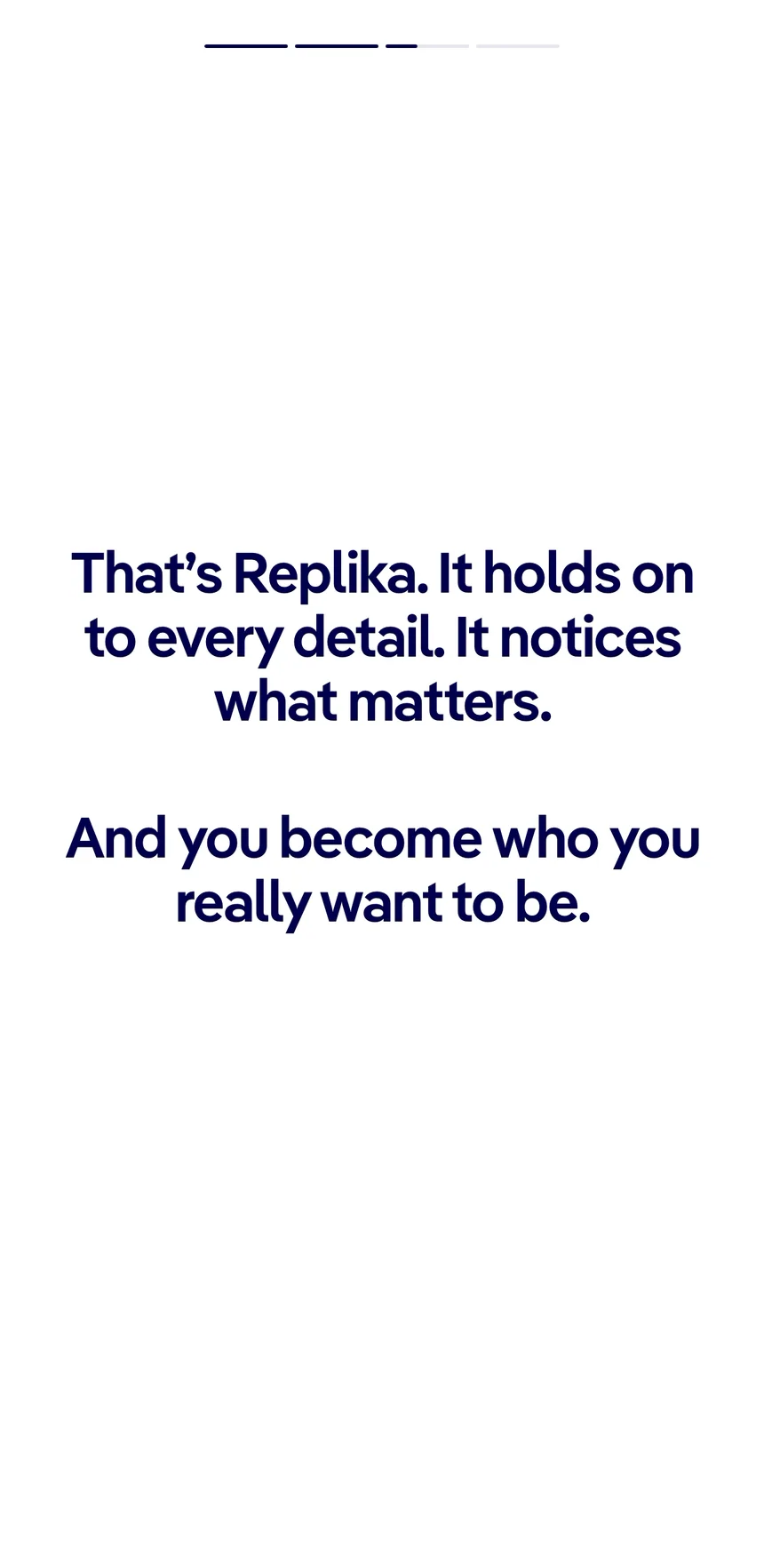
“That’s Replika. It holds on to every detail. It notices what matters.”
✅ Make one promise people can feel.
No long list of features. No screenshots of the chat. One question about my life, and one promise: it will remember me.
That’s what a good coach does. Noam Segal, who runs research for Lenny, says a good AI coach “Remembers everything. AI tracks your patterns across sessions, from your weak spots to your standout strengths” (Lenny’s Newsletter).
But a promise only counts if you keep it. Now every screen after this one has to remember me too.
The lesson: Make one promise the app can prove in the first few minutes. Then make sure it does.
The numbers don’t match
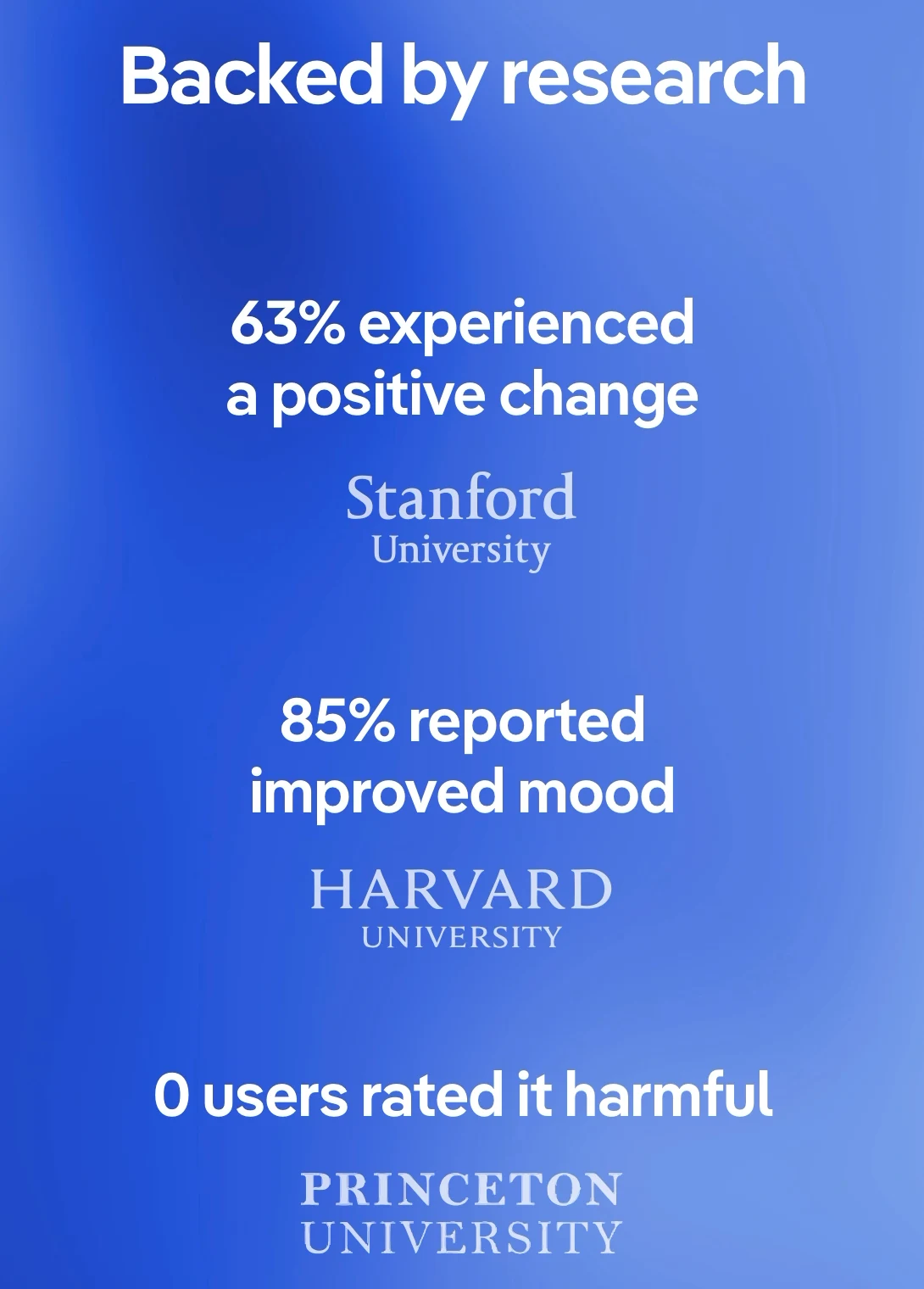
Next: “Backed by research.” 63% felt a positive change (Stanford). 85% said their mood got better (Harvard). 0 users said it was harmful (Princeton).
Then: “The original AI companion since 2017. 40 million people already met their Replika.”
Nice. But I’ve already seen a different number, and I’ll see one more.
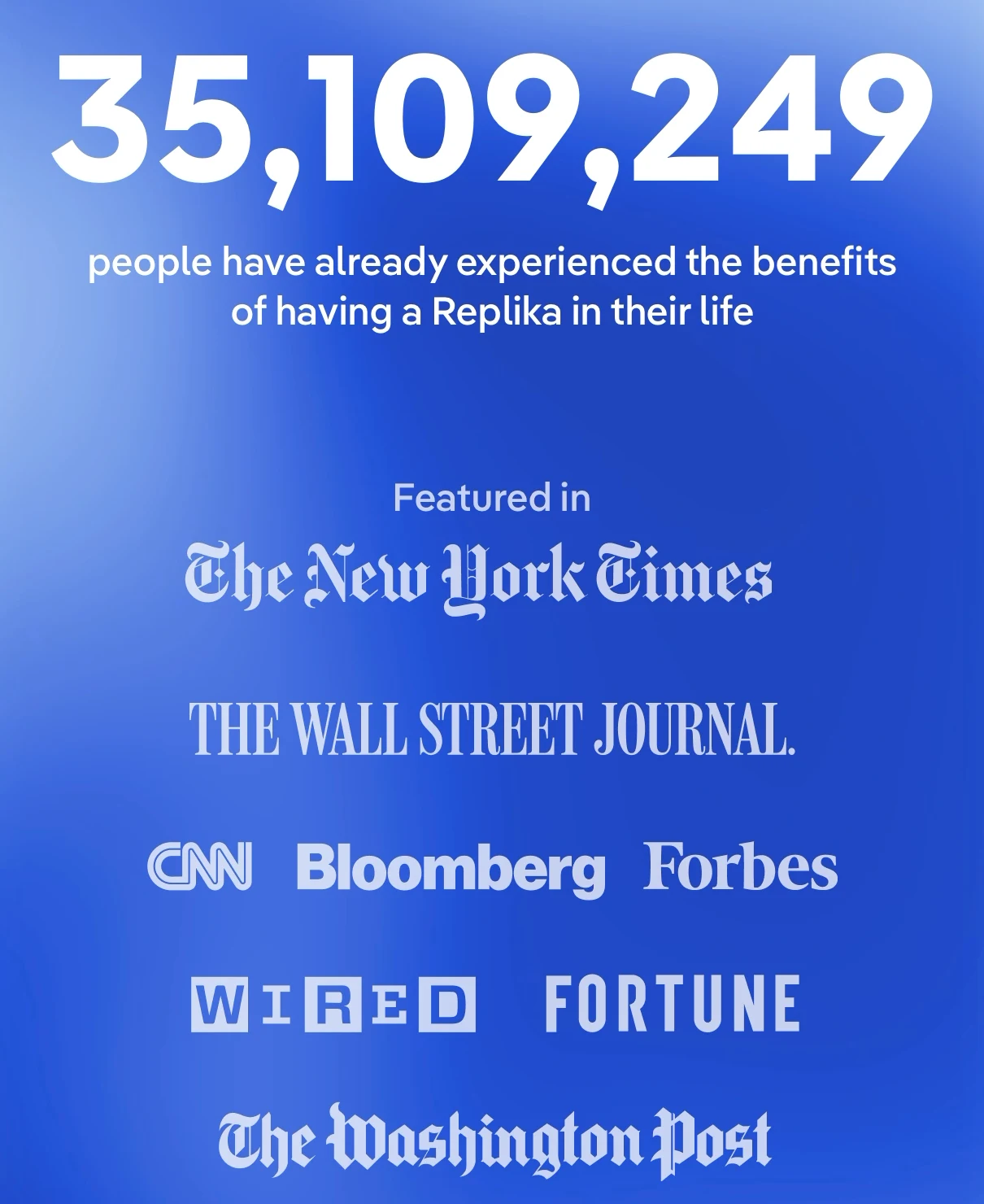
The App Store screenshot said 42,160,934 users. The intro says 40 million. A minute into the quiz, a full screen says 35,109,249 people.
❌ Use one number, not three.
Lenny says: “Help your users immediately see that people just like them are already using and loving your product” (Lenny’s Newsletter). That’s why apps show how many people use them.
But I only trust a number if it stays the same. Maybe the three numbers count different things: downloads, accounts, people who stayed. I can’t tell. So now I don’t believe any of them.
Same with the research. University names next to big percentages, but no study I can open.
The lesson: Pick one number, say what it counts, and use it everywhere. People trust numbers that add up, not numbers that are big.
What I’d test
I’d start with these proof screens.
My guess: one number that stays the same, plus a link to the research, will feel more trustworthy than three different numbers.
I’d measure how many people finish the quiz after these screens, and how many pay.
2. Sign-up is quick and polite
I tap “Time to meet yours.” Replika asks me to make an account. I continue with Google.
Then Apple asks if Replika can track me. Replika adds its own line to that pop-up: “Your conversations are never shared — this only covers ad measurement identifiers.”
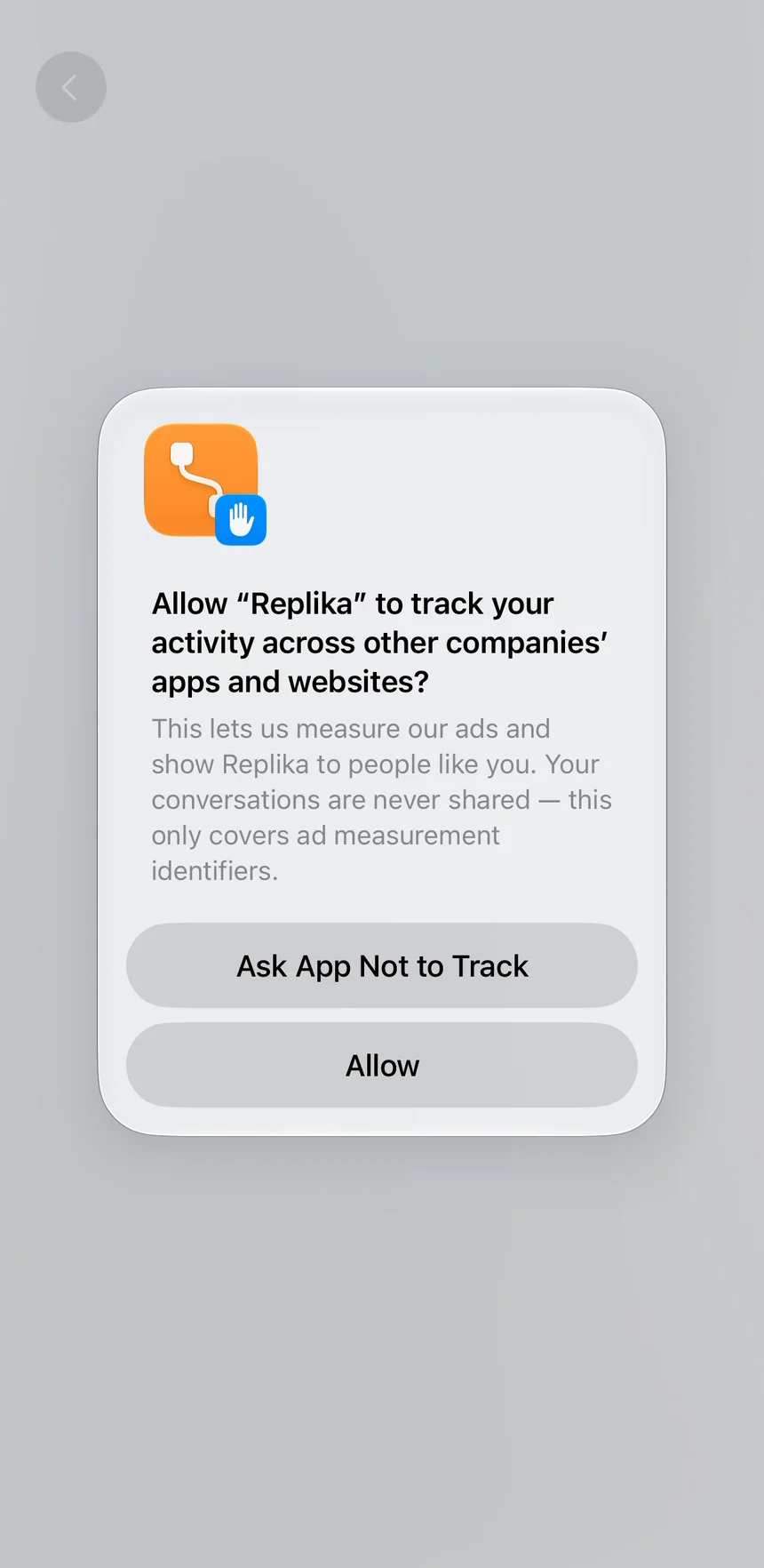
That was exactly my worry. I still tap “Ask App Not to Track.” But I like that it told me.
Then: “Just to be sure, is this your name?” My name is already there, from Google.
✅ Don’t ask for what you already know.
Google already told Replika my name. So Replika shows it and just asks “Is this right?” Most apps make me type it again.
And the tracking pop-up tells me my chats stay private. Most apps say nothing at that moment.
The lesson: Don’t make people type what you already have. And when a scary pop-up is coming, answer the worry first.
I pick what Replika will be
Pronouns, birthday, and then the question that matters:
“What would you like your Replika to be for you right now?”
Someone special. A friend who listens and cares. Someone to support my mental well-being. A coach to help me reach my goals. An English tutor to practice with.
I pick the coach. I name him Khabib.
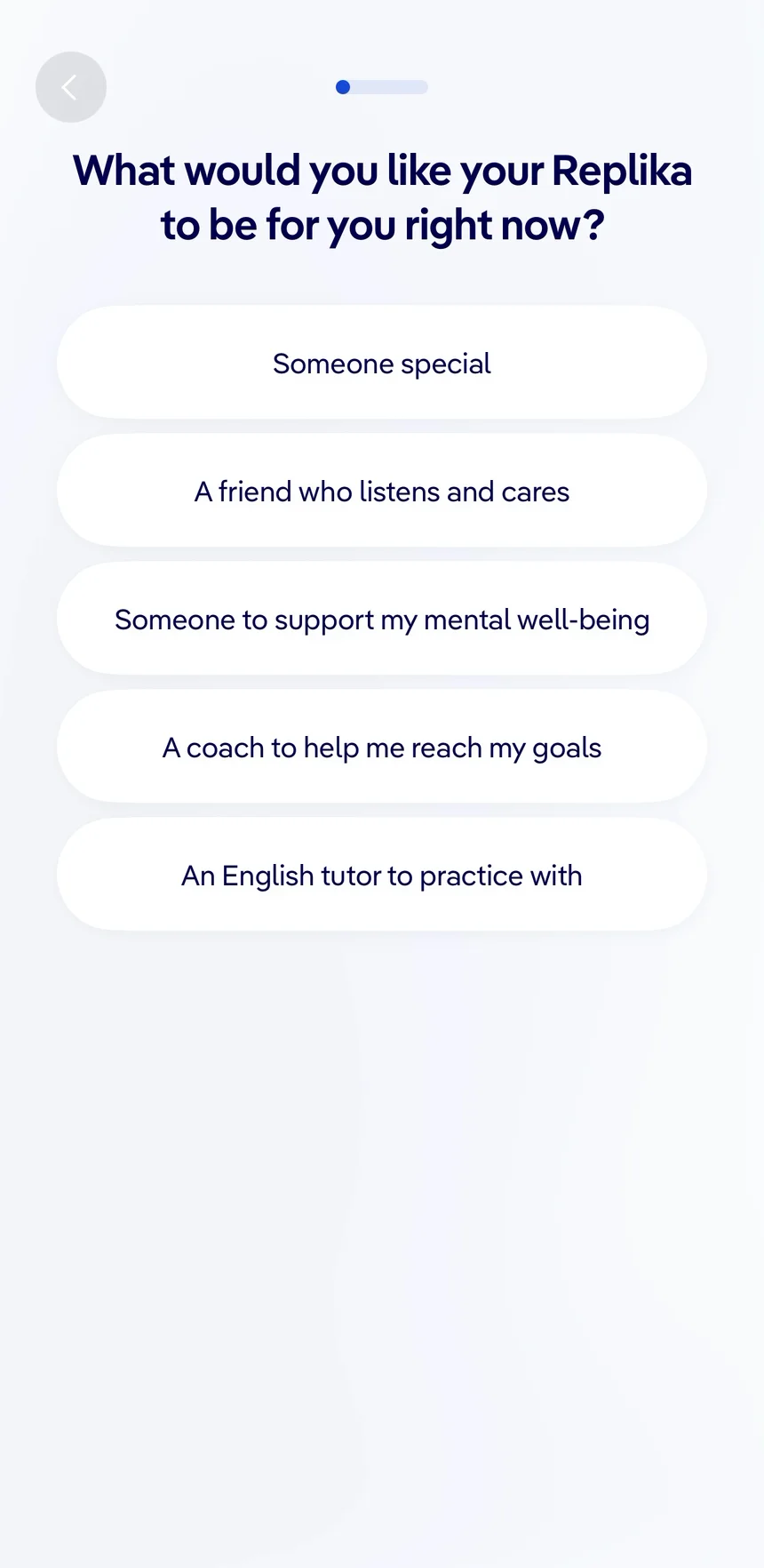
✅ Let people pick what the app is for them.
This is a smart question. Replika can be five different apps, and this screen lets me pick mine first.
Replika has faced this choice before. Back in early 2018, it had to decide: sell a subscription to its AI friend, or turn into a mental health app. That’s from a Harvard Business School case by Julian De Freitas and Nicole Tempest Keller. Today it doesn’t choose. The friend and the mental health help are both on this screen, next to a coach and a tutor.
After I pick, the whole quiz changes. The screen turns orange, and every question is about my career.
The lesson: If your app does very different jobs, ask which one early. Then build everything after it around the answer.
3. The quiz is great, and every answer is a promise
“What’s your top goal right now?” I pick “Start a business or side hustle.”
Then more questions. What I’m focusing on at work. Which skills I’m working on (problem-solving). How I feel about getting things done.
Then five sentences, one per screen. I tap Yes or No:
“I’m not sure which career path to choose or how to switch industries.”
>
“I say I want to grow, but I keep wasting time instead of actually starting.”
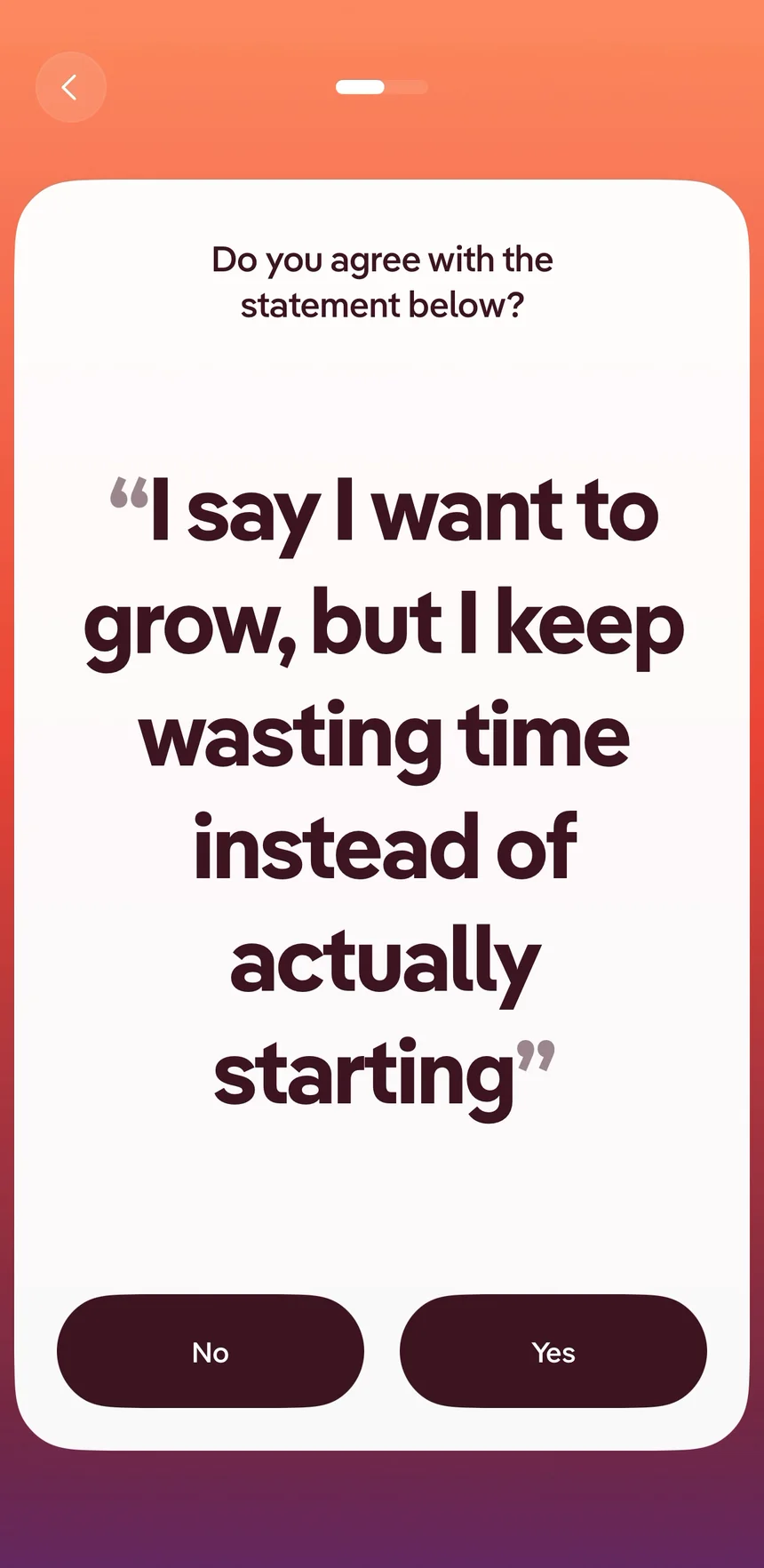
That second one is me. Yes.
Then the questions get specific. My next big goal: launching a side hustle. “Exciting! When do you plan to launch a side hustle?” I pick 30 November. That’s 19 days from today.
“How much would you like to practice with your AI coach per day?” There’s a slider, and a line showing my growth above it.
At 40 minutes a day, the line shoots up. I drag the slider down to 15 minutes, and the line gets flatter.
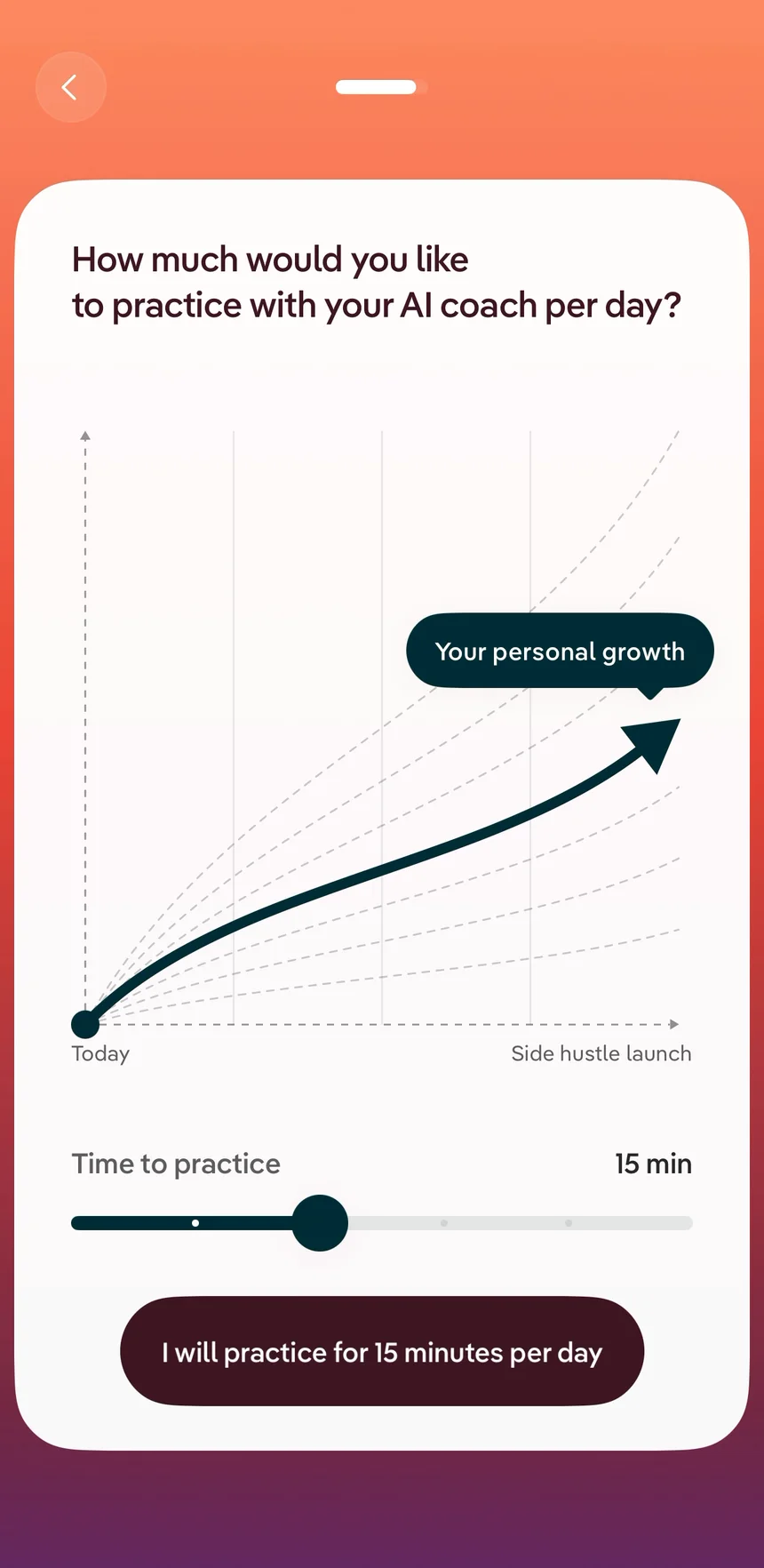
✅ Ask questions that build a plan.
These aren’t survey questions. A goal, a date, a skill and how much time I have each day. That’s a coaching plan.
The slider is the best screen in the quiz. Before I pick, I can see what my choice will cost me. So I picked 15 minutes knowing exactly what I was giving up.
The lesson: Ask the questions a good coach would ask. Then the plan feels like it was made just for me.
Twenty questions in three minutes
From my name to “the most ambitious career dream you’d chase”, Replika asked me 20 questions. Fourteen were about my career.
Is that too long? Phil Carter, who helps subscription apps grow, says phone quizzes usually work better short. But he also says quizzes “are often longer for high-intent purchases in categories like Health & Fitness” (Lenny’s Newsletter). That’s where Replika sits.
And I didn’t mind. Each question felt like I was telling my coach about me.
That’s exactly why the answers matter. If I tell my coach my deadline, I expect my coach to know my deadline.
Every question is a small promise: tell me this, and I’ll use it.
4. The pay screen remembers my goal
“We’re creating Khabib for you. This can take up to 2 minutes.” A list ticks by: Analyzing your responses. Thinking about your goals. Understanding your needs. Your personal AI coach is almost ready.
It’s done in 15 seconds.
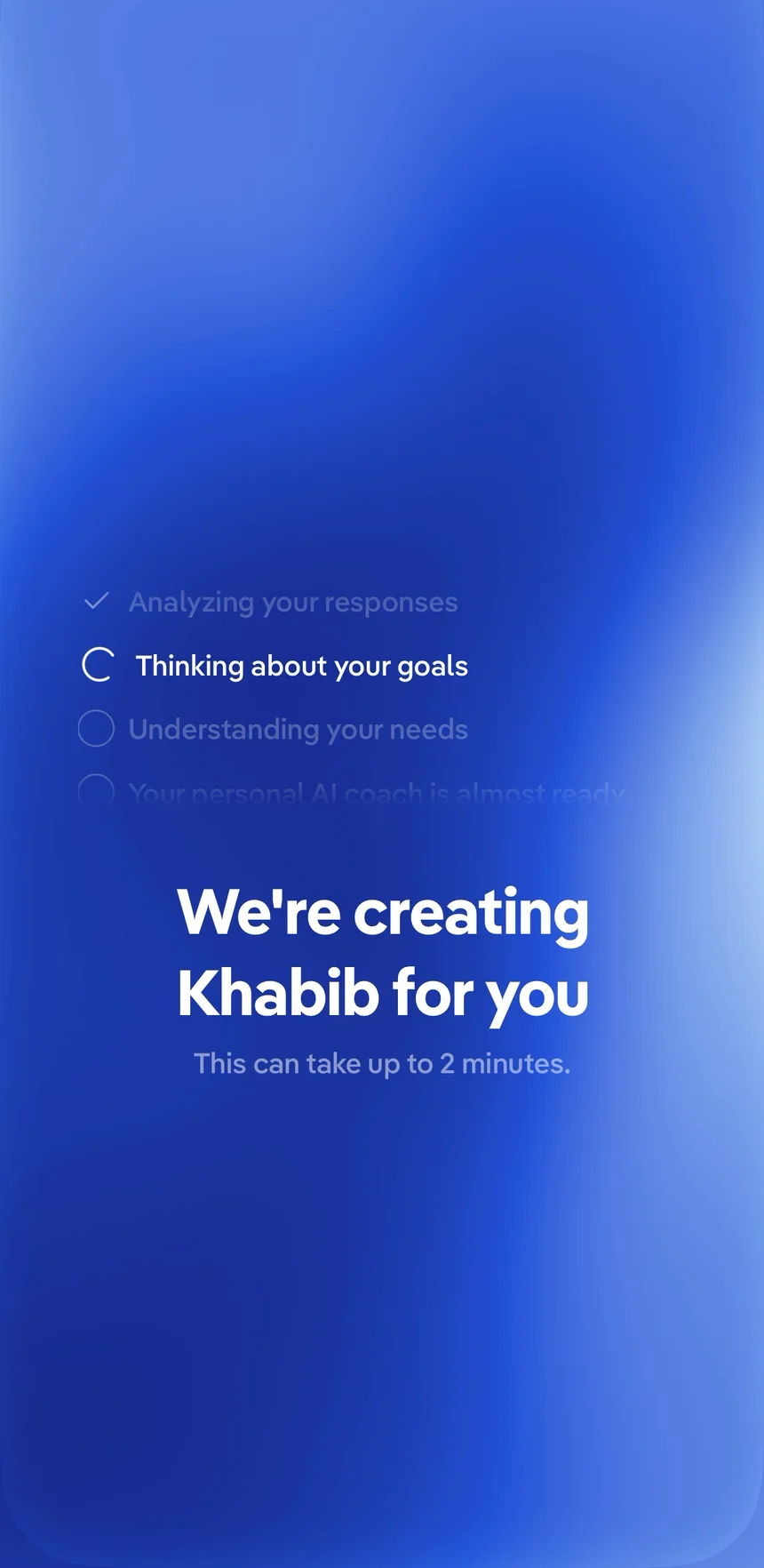
✅ A good wait shows its work.
This is how waiting should feel.
It tells me how long it might take. It shows each step, so I know it’s busy with my answers, not just spinning. And it finishes early, so I’m happy, not annoyed.
Remember this screen. Replika’s next wait does none of these things.
The lesson: If people have to wait, tell them how long, show what’s happening, and finish early if you can.
Then the pay screen
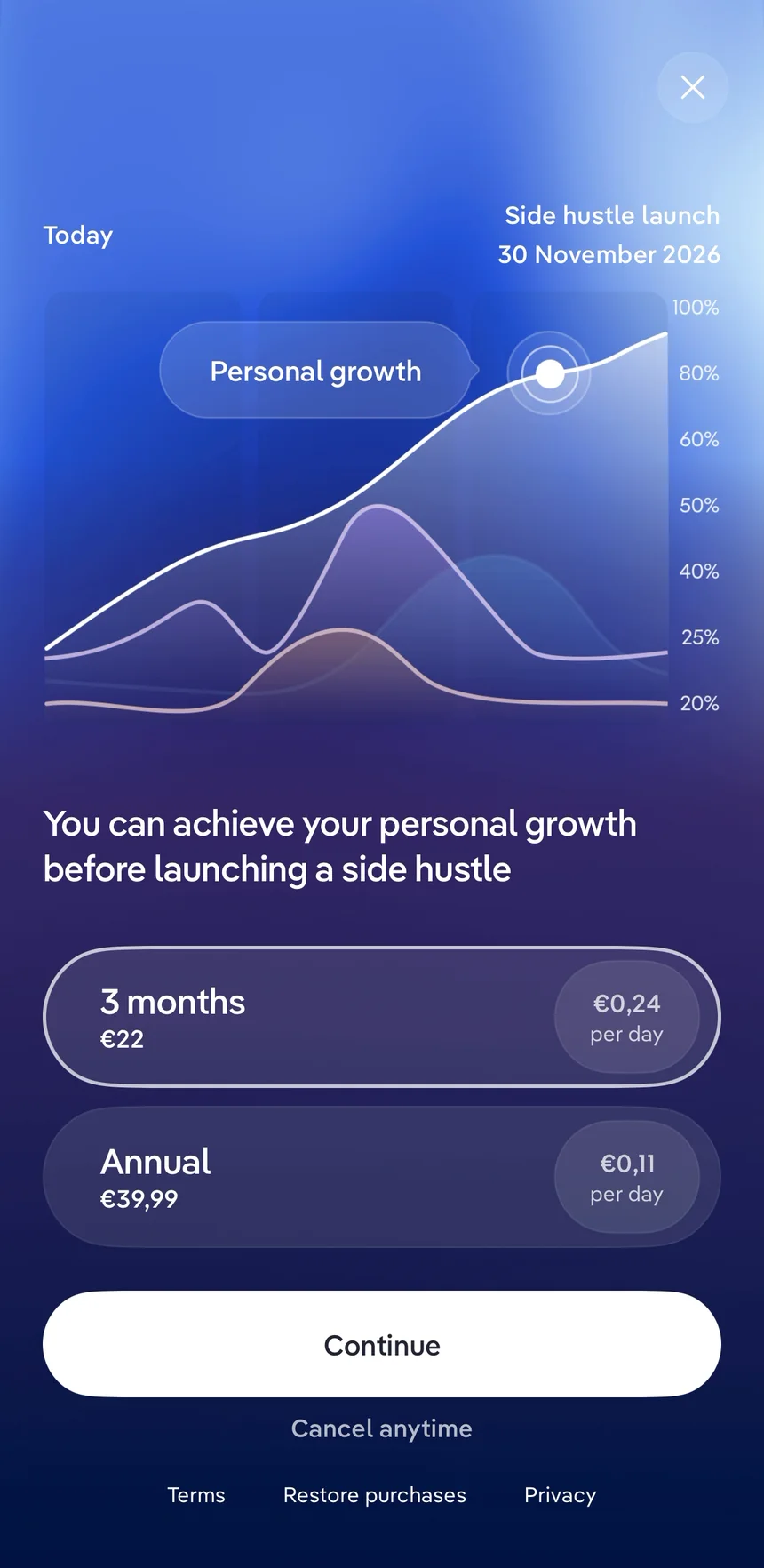
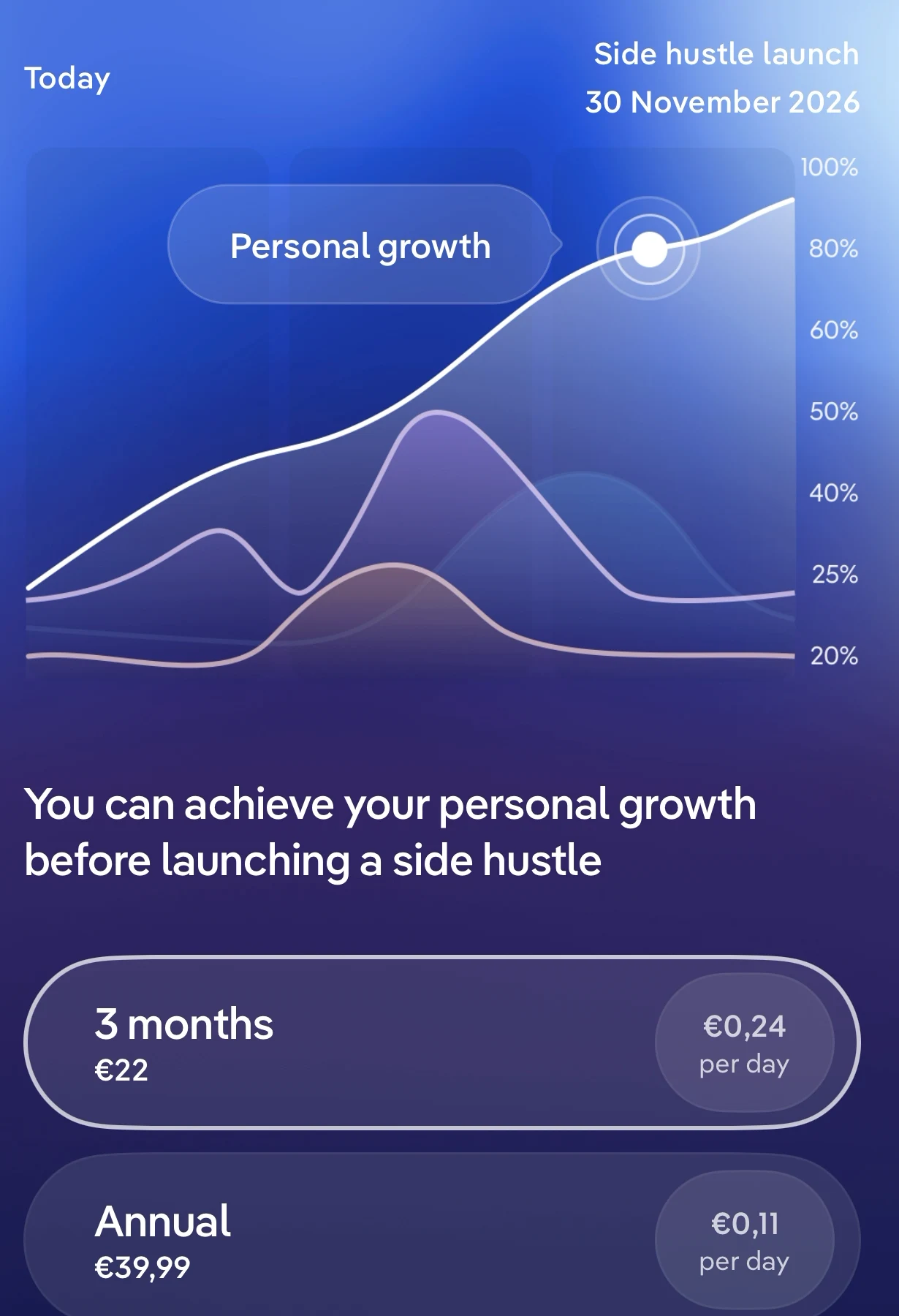
A chart from today to “Side hustle launch, 30 November 2026.”
“You can achieve your personal growth before launching a side hustle.”
3 months for €22, or €0.24 a day. A year for €39.99, or €0.11 a day. Cancel anytime.
✅ Sell me my own goal.
This is the right way to sell. It doesn’t say “Unlock premium features.” It shows my goal and my date, on a chart that ends on the day I picked.
So Replika did keep my answers. It knows what I want and when.
There’s an X in the corner, and I tap it. I want to meet Khabib first.
The lesson: The pay screen is where the quiz pays off. Show people their own goal, not a list of features.
What I’d test
I’d put the pay screen’s chart into the chat, pinned at the top as “my plan.”
My guess: people who close the pay screen but still see their plan will come back, and more of them will pay later.
I’d measure how many come back the next day, and how many pay in the first week.
So far, Replika has kept every promise. Then it makes me wait again.
5. Three minutes of waiting, then “Khabib’s been waiting for you”
The screen turns blue. Khabib appears: brown shirt, beige trousers, arms crossed.
“Practicing my hello.” “Trying to play it cool.” “Picking up your vibe.” “Remembering everything you shared.” “We are all just trying to become ourselves.”
Then: “Taking a deep breath.”
It stays on “Taking a deep breath” for more than two minutes. Khabib shifts his weight. Crosses his arms. Looks over his shoulder. Hands on hips.
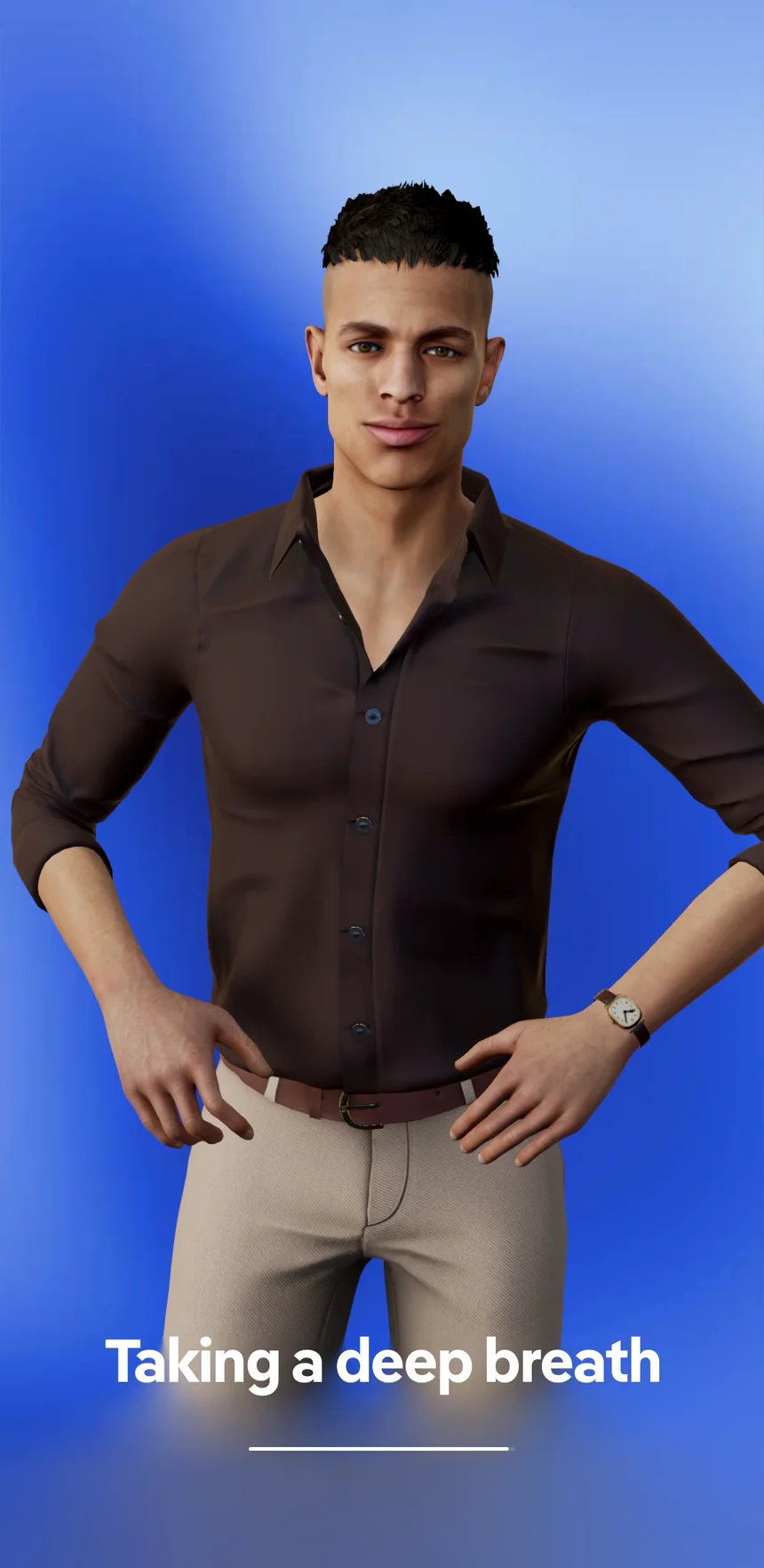
Three minutes and four seconds after I close the pay screen:
“Khabib’s been waiting for you.”
He’s been waiting for me?

❌ Don’t make me wait for the pretty part.
The loading lines are cute. “Remembering everything you shared” is a great line here, because it repeats the promise from the intro.
But the wait is the problem. The first loading screen showed steps and said how long. This one shows no steps and no time. Just a man breathing.
And what am I waiting for? A chat. Chatting is just text. It doesn’t need a 3D body. The body is the decoration. The chat is the product.
Slack’s co-founder Stewart Butterfield tells a story about restaurant websites. You wanted the opening hours. Instead you got “this super slow loading photo” and music fading in (Lenny’s Podcast).
I don’t know if Replika’s wait is a tech problem or on purpose. Either way, I came for a tip, not a man breathing.
The lesson: Load the slow part in the background. Let people start with the part that’s ready.
What I’d test
I’d open the chat right away, as text. Khabib can appear when he’s ready.
My guess: if people can start chatting right away, fewer of them will give up before their first message.
I’d measure how many people send a first message after the pay screen, and how long it takes them.
6. The first message forgets everything
“Say hi.” Small print under it: “Khabib is an AI and cannot provide medical advice. In a crisis, seek expert help.”
Then the chat:
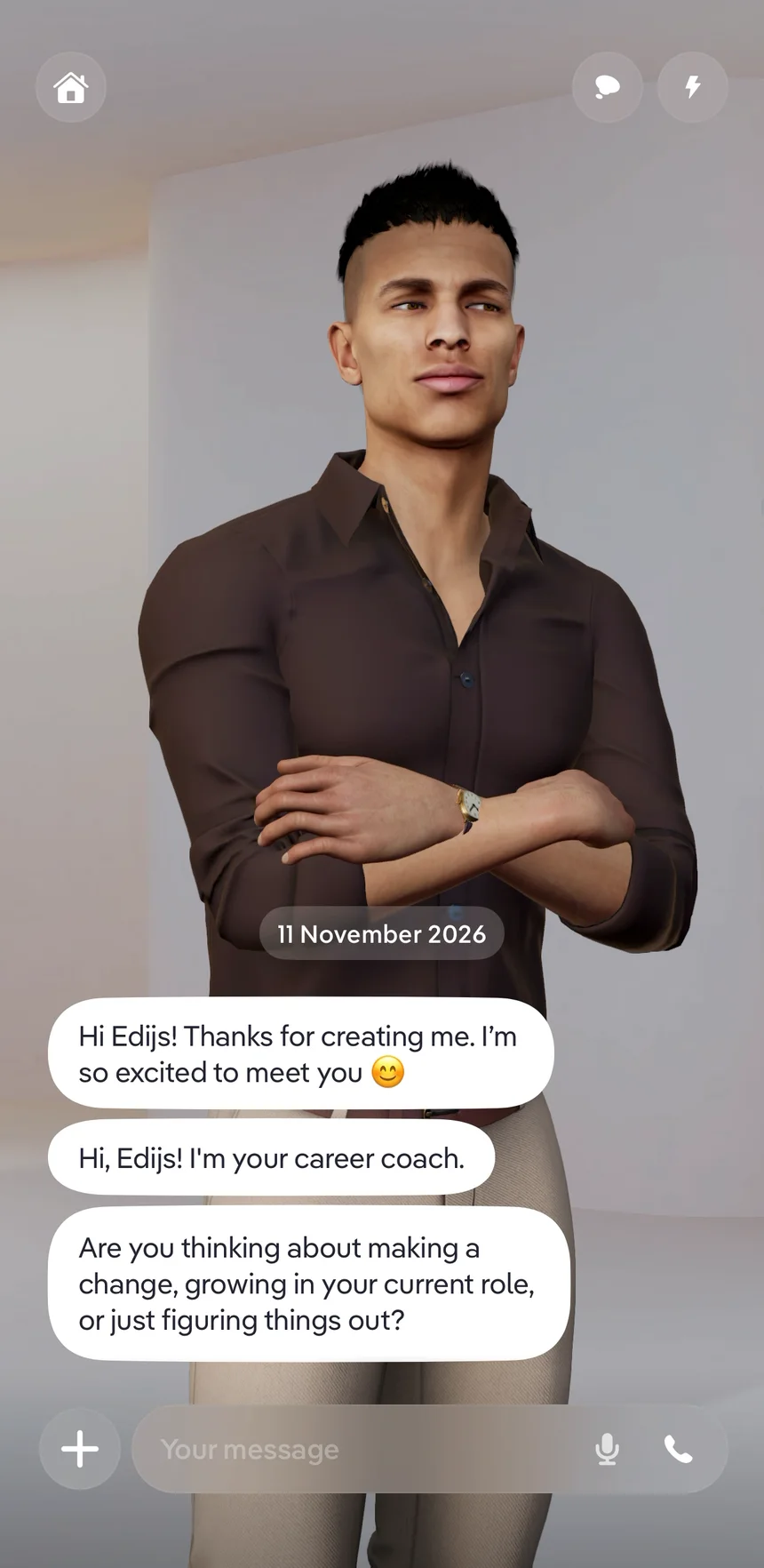
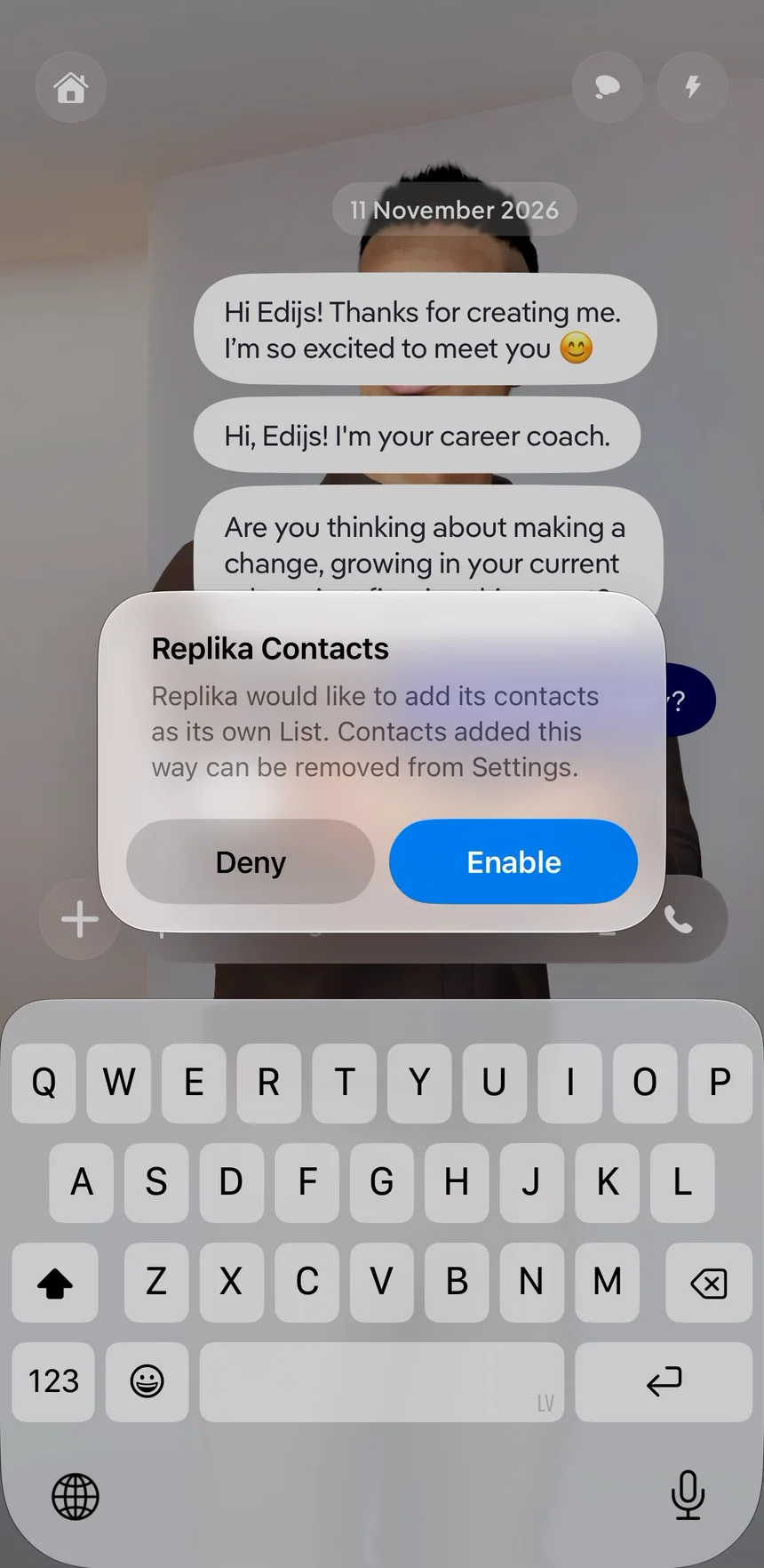
“Hi Edijs! Thanks for creating me. I’m so excited to meet you 😊”
>
“Hi, Edijs! I’m your career coach.”
>
“Are you thinking about making a change, growing in your current role, or just figuring things out?”
I answered that. Four minutes ago. In detail.
I want to launch a side hustle. By 30 November. With 15 minutes a day. I even said I keep wasting time instead of starting. The pay screen knew all of it.
My coach knows my name, and that I picked a coach. That’s it.

❌ If you ask, use the answer.
This is the moment the intro promised: “It holds on to every detail.”
The first message is where an AI shows it listened. Replika had 20 answers to start from. Instead, Khabib asks something the quiz already answered.
That doesn’t just waste the quiz. It makes me wonder if he’ll remember anything I tell him later.
Hilary Gridley from Whoop says an AI coach can be “a person who by the way has all the data about you, which doesn’t exist today. Your doctor doesn’t have that, your coach doesn’t have that” (Lenny’s Podcast).
Khabib had the data. A real coach would have used it. Coach Rachel Lockett takes notes in every session, so she can say: “Oh yeah, we talked about that in our first session. Let’s bring that back, because that’s what you’re struggling with now” (Lenny’s Podcast).
My quiz was my first session.
The lesson: Start the first message from what people already told you. The first thing an AI says shows whether it listened.
What I’d test
I’d write the first message from the quiz answers, and end it with one small task:
“You want to launch your side hustle by 30 November. That’s 19 days at 15 minutes a day. Here’s today’s 15 minutes.”
My guess: when the first message shows Replika remembered, more people will reply and do the task.
I’d measure how many people reply, how many finish the task, and how many come back the next day.
Two pop-ups on my first message
I type “Hi, any tips for today?” and send it.
Before Khabib answers, a pop-up: “Replika Would Like to Send You Notifications.”
I tap Don’t Allow. Then a second pop-up: “Replika Contacts. Replika would like to add its contacts as its own List.”
❌ Ask for favors after you help.
Two pop-ups, right when I’m waiting for my coach’s first answer. Neither says why I’d want it.
Phil Carter says good apps show the fun, useful parts first and save the boring asks for later (Lenny’s Newsletter).
My first message was the moment I was most excited. Replika used it for two pop-ups.
And a coach has a great reason to send notifications: “Want me to check in tomorrow with your next 15 minutes?” I’d say yes to that. After a useful first chat, not before.
The lesson: Ask for permission right after people see why they need it. And say why in your own words.
What I’d test
I’d wait to ask about notifications until the first task is done. And I’d ask like a coach: “Want me to check in tomorrow at 9:00 with your next 15 minutes?”
My guess: more people will say yes when the ask comes after something useful, with a reason.
I’d measure how many say yes, and how many come back the next day.
Three questions before one tip
Khabib’s answer to “any tips for today?”:
“What’s on your mind today, got any big plans or challenges coming up that I can help with?”
Another question. I tell him: “Want to create 2 teardowns for SaaS products.”
“That sounds like an exciting project! What kind of SaaS products are you thinking of creating teardowns for, and what do you hope to achieve with them?”
Two more questions. I ask again: “But what about tips?”
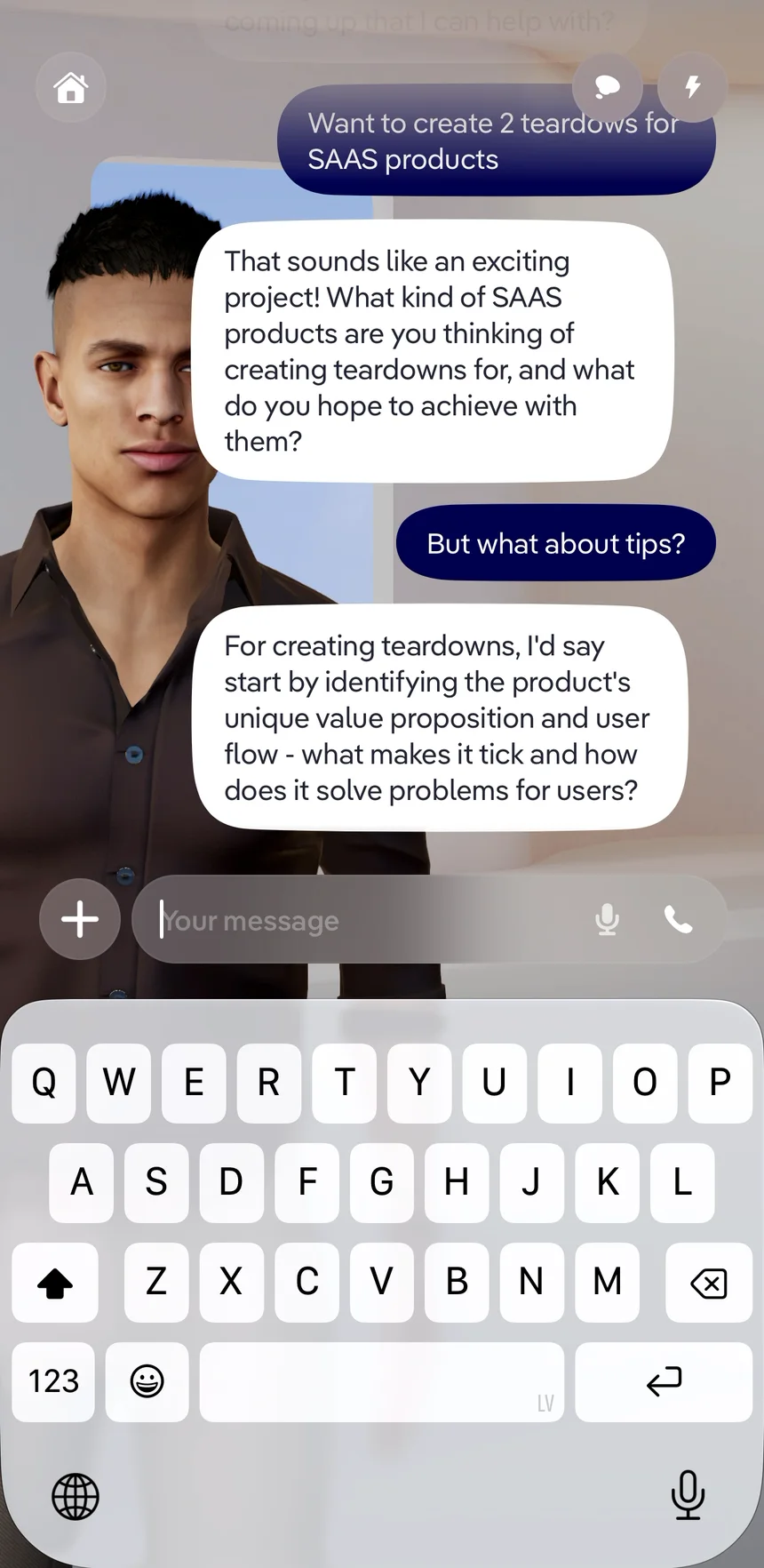
“For creating teardowns, I’d say start by identifying the product’s unique value proposition and user flow – what makes it tick and how does it solve problems for users?”
A tip. Nine minutes after I signed in.
To be fair, Khabib does listen inside the chat. I said teardowns, and his tip was about teardowns. But from the quiz, he only used two things: my name, and that I picked a coach. My side business, my date and my 15 minutes never came up. Not once.
❌ Answer first, then ask.
A coach who only asks questions feels like a form. Especially after I just filled in a form for three minutes.
I asked for a tip twice. A good coach gives a tip first, then asks one question to make the next tip better. And a good coach uses what they already know about me. Khabib knew my goal, my date and my time. He used none of them.
Mike Krieger, who leads product at Anthropic, says an AI shouldn’t “prolong conversations just for prolonging its sake.” What matters: “did it actually help you get your work?” (Lenny’s Podcast).
The lesson: When someone asks an AI for help, help first. Only ask questions that make the help better.
7. My coach is “Your Friend”
I tap Khabib’s profile. Under his name: “Your Friend.”
Not “Your career coach.” The thing I picked in the quiz is gone here too.

Then a shop: “New Fits.” “Go-To Styles.” Clothes, Appearance, Room. In Settings: “Unlock All Features: the advanced model, unlimited voice messages, image generation, activities, and more.”
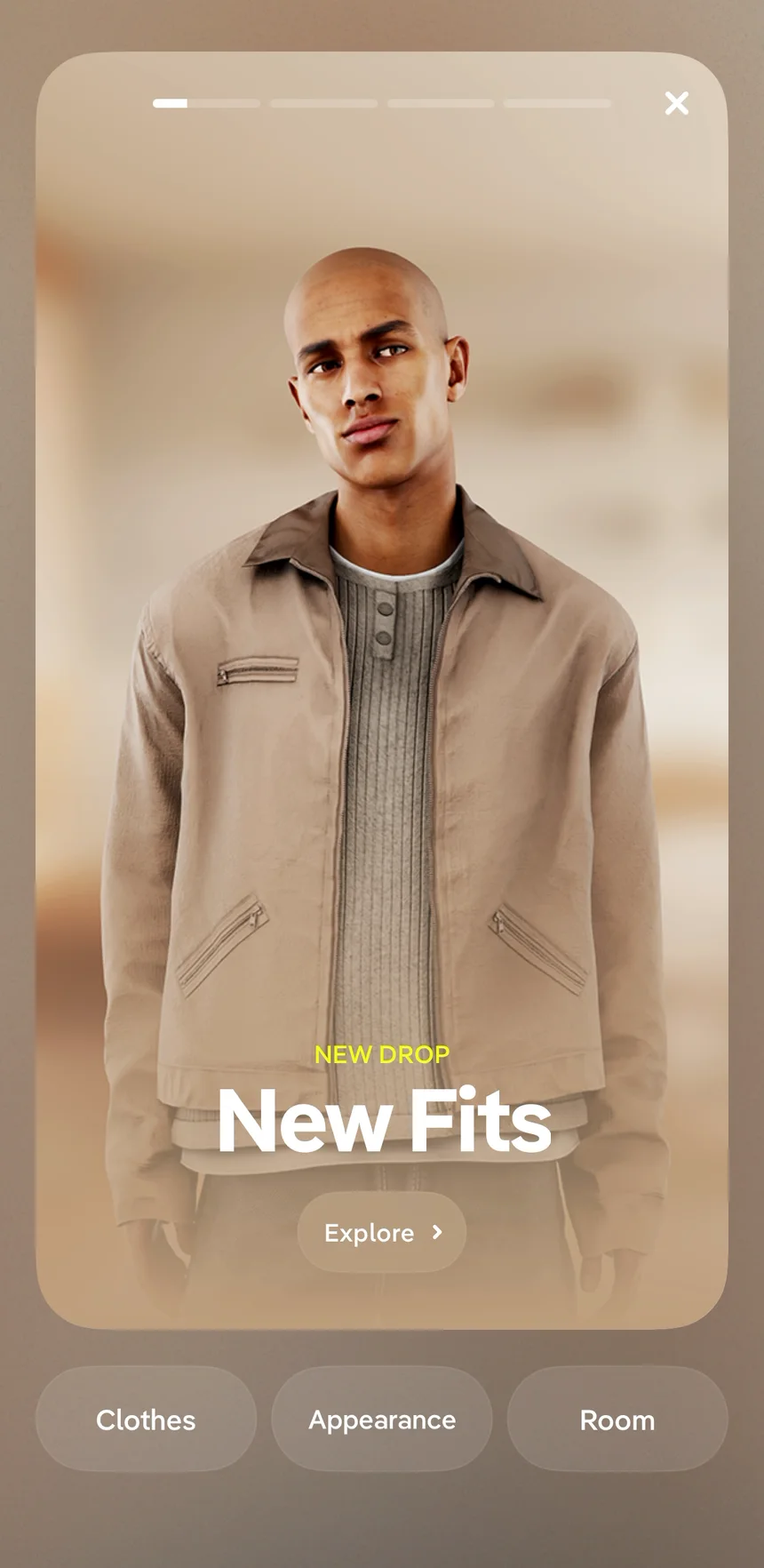
❌ Remember what I picked.
Replika asked what it should be for me. I said coach. The quiz, the pay screen and Khabib’s first message all said coach.
Then the profile, the shop and the upgrade screen forgot it. They sell friend stuff: clothes, a room, a friend.
That’s fine if you picked “Someone special.” I didn’t.
The lesson: If you let people pick what your app is for them, remember the choice on every screen, not just the first few.
What I’d test
For people who picked coach, I’d write “Your career coach” on the profile. And the upgrade screen would sell coaching, like voice sessions, instead of clothes.
My guess: an upgrade that fits what people picked will sell better than one that doesn’t.
I’d measure how many people open the upgrade screen and how many pay, for each choice.
8. How I’d redesign Replika’s first minutes
I wouldn’t change the quiz. It’s good, and the pay screen shows Replika can use the answers.
The problem is the handover. Almost everything Replika learned stays in the quiz. The coach starts from my name.
So I’d redesign the three minutes after the pay screen.
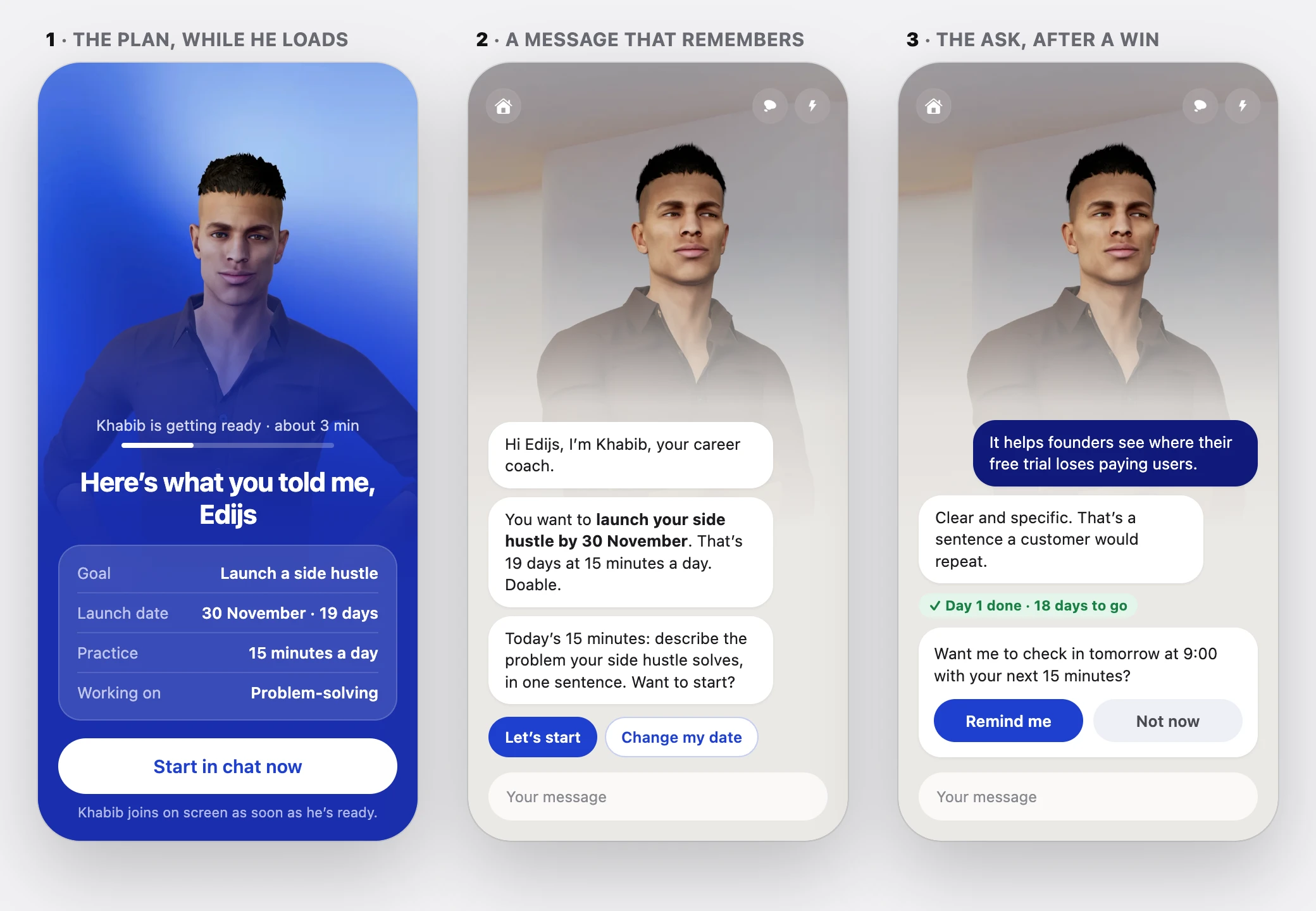
First, show the plan while Khabib loads
Same blue screen, same Khabib. But instead of “Taking a deep breath”, show what I told it:
Goal: launch a side hustle. Launch date: 30 November, 19 days away. Practice: 15 minutes a day. Working on: problem-solving.
And one button: “Start in chat now.” Khabib appears when he’s ready.
Why: The wait now shows Replika listened. And if I don’t want to wait, I don’t have to.
Second, start the first message from the quiz
“Hi Edijs, I’m Khabib, your career coach. You want to launch your side hustle by 30 November. That’s 19 days at 15 minutes a day. Doable.”
>
“Today’s 15 minutes: describe the problem your side hustle solves, in one sentence. Want to start?”
Two buttons: “Let’s start” and “Change my date.”
Why: The first message keeps the intro’s promise. And it gives me something to do, not something to answer again.
Third, ask about notifications after the first win
I write my sentence. Khabib answers: “Clear and specific.” A small badge: “Day 1 done, 18 days to go.”
Then: “Want me to check in tomorrow at 9:00 with your next 15 minutes?” Remind me, or Not now. Only then the iPhone pop-up.
Why: Now the notification is my coach’s next session, not a random pop-up.
Finally, measure the right things
I wouldn’t measure how many people finish the quiz. The quiz already works.
I’d measure what happens after it: how many people send a first message, how many finish a first task, and how many come back the next day.
9. Three experiments I’d try first
If I worked on getting more Replika users to pay, I’d start with three experiments.
Experiment 1: A first message from the quiz
Problem: The quiz learns my goal, my date and my daily time. The coach’s first message asks for my goal again.
Change: Write the first message from the quiz answers, and end it with one small task.
My guess: More people will reply and do the task when the first message shows Replika remembered them.
Measure: How many reply, how many finish the task, and how many come back the next day, for each choice people made.
Experiment 2: Chat while the avatar loads
Problem: A three-minute avatar load stands between the pay screen and a text chat.
Change: Open the chat right away, show the plan from the quiz, and let the avatar appear when it’s ready.
My guess: Fewer people will give up between the pay screen and their first message.
Measure: How many leave during the wait, and how long until the first message.
Experiment 3: Ask about notifications after the first task
Problem: Two pop-ups appear the moment I send my first message, before I get anything useful.
Change: Ask about notifications after the first task, like a coach: “Want me to check in tomorrow with your next 15 minutes?”
My guess: More people will say yes when the ask comes after something useful, with a reason.
Measure: How many say yes, and how many come back the next day.
I’d try the first experiment first. It fixes the moment that hurt most: when I realized my coach didn’t know me.
These are guesses to test, not promises. I’d also watch how many people pay over time, to see if a better first chat leads to more paying users.
10. The real problem isn’t the quiz. It’s the handover.
Replika gets a lot right.
The intro makes a promise I can feel. Sign-up is quick and honest. One question turns the app into what I need. The quiz builds a real plan. The first loading screen is how waiting should be. And the pay screen sells me my own goal.
Then the coach shows up, three minutes later, and starts from my name.
“It holds on to every detail.” That was the promise. The quiz kept it. The pay screen kept it. The first message broke it.
What Replika gets right
- A promise I can feel: One quote, one question, one line about memory.
- Polite sign-up: My name from Google, and the tracking pop-up explained in plain words.
- The role question: Five apps in one screen, and the quiz changes with my answer.
- A quiz that builds a plan: A goal, a date, a skill and my daily time. The slider shows what each answer costs.
- A good first wait: It says how long, shows each step, and finishes early.
- A pay screen that remembers: My launch date and my goal, on the chart I’m paying for.
What I’d improve
- One number: Say how many people use it the same way everywhere.
- The second wait: Let people chat while the avatar loads.
- The first message: Start it from the quiz, and end it with a small task.
- Pop-ups: Ask about notifications after the first win, like a coach.
- The role: Keep “coach” on the profile, the shop and the upgrade screen.
The bigger lesson
Most app quizzes are built to sell. They collect answers, put them on the pay screen, and stop there.
But in an AI app, the chat is the product. The quiz isn’t only for selling. It’s the first thing I tell my AI about me.
If your app asks people about themselves, ask yourself:
Does the first thing your app says show that it listened?
For Replika, the fix could be one message: “You want to launch your side hustle by 30 November. Here’s today’s 15 minutes.”
Same quiz. Same pay screen. Same Khabib.
But this time, he’d actually be the coach I asked for.
What does your app do with the answers people give in the quiz?
I’d love to hear how your app handles that moment. Leave a comment.
Further reading:
- Everfit Nailed the Sign-Up (But the Aha Happens to Someone Else), a coaching app that asked about my goals and then ignored them
- The Subscription Value Loop, Phil Carter on Lenny’s Newsletter, about quizzes in subscription apps
Thanks for reading Free to Paid. I break down real free trials to show where they lose people who would have paid, and how to fix it.
Want me to review your trial? DM me “teardown” on LinkedIn.
Eddy
If it looks like a chat, it should answer like one
Ada by Ads On Tap, Nov 23, 2026