How to make your product sell itself
12 min read · about Product-led growth ·
How to make your
product sell itself
Product-led growth in one framework: close the gap between what you promise and what people feel.
Product-led growth in one framework: close the gap between what you promise and what people feel.
1 / 27

Written by
Eddy Bogomolov
Product designer for B2B free trials
Published
What you'll learn
- How Slack, Calendly, Zoom and Dropbox turn a free product into their best salesperson
- Why people don’t pay when what they feel in your product falls short of what you promised
- The Bowling Alley Framework: a straight line to first value, with product and conversational bumpers
- What good looks like: the real activation metrics and benchmarks Lenny’s Newsletter collected
Product-led growth sounds new, but you have done it before: you sprayed a perfume before buying it, test-drove a car, took the Costco sample.
How to make your product sell itself, chapter by chapter
Part 1
What product-led means
Try before you buy is older than software
Product-led growth means the product does the selling. Perfume testers, test drives and Costco samples have done it for decades. Software just made it cheaper to let everyone try.
- Spray it first. You try a perfume on your wrist before you pay. If you like it, you’re far more likely to buy. The tester bottle is the free trial.
- Take a test drive. A car is a big purchase, so trying it is part of buying it. The test drive is the freemium plan.
- Grab a sample. Costco hands out food you would never have picked off the shelf. One bite sells the whole pack.
Software just made it cheap to let everyone try.
Value gap, time to value, PLG, bowling alleys… It sounds like a formula. It isn’t. You already use products that do this every day.

Part 1
Products that already do it
Four products that sell themselves
Slack, Calendly, Zoom and Dropbox grew without a sales team at the front door. Each lets you feel the value first, spreads through the people you use it with, and asks for money only when a limit gets in the way.
- Slack. Free for any team. Every teammate you invite is a new user, and the free plan keeps working until the team is hooked. The upgrade prompt appears when an old message you need is hidden behind the history limit.
- Calendly. Every booking link you send is a demo for the person on the other end. They see it work before they ever sign up. The invitee books a slot in 20 seconds, then creates their own link the next week.
- Zoom. You can join a meeting with no account at all. Hosting is free too, up to 40 minutes for a group call. The 40-minute cut-off is the sales pitch: it lands exactly when the meeting matters.
- Dropbox. 2 GB free, and more space for every friend you bring in. The product rewards you for selling it. Dropbox said its referral program lifted sign-ups by about 60%.
Feel it first, spread it to others, pay when a limit gets in the way.


Part 1
Freemium, free trial or both
Three ways to let people try
Freemium gets more sign-ups, free trials get more payers. Lenny’s Newsletter has the numbers: 9% of visitors sign up for freemium products against 5% for free trials, but trials convert two to three times better. Lauryn Isford of Airtable argues for a reverse trial: both at once.
- Freemium. Free forever, with a paid tier above it. About 9% of visitors sign up, and fewer of them ever pay. Canva, Trello, Typeform. Good is 3 to 5% paying within six months (Lenny’s Newsletter).
- Free trial. Everything, for a limited time. Only 5% of visitors sign up, but they arrive ready to buy. Shopify, Google Workspace, Intercom. Good is 8 to 12% paying (Lenny’s Newsletter).
- Reverse trial. Everyone starts on the full product for a few days, then drops to the free plan. You get both. Lauryn Isford, Airtable’s Head of Growth: offer a trial but also offer freemium, “do both” (Lenny’s Podcast).
Pick the model by how fast people can feel the value.
Part 1
What product-led means
Perceived value vs experienced value
Perceived value is what your landing page promises. Experienced value is what people feel once they are inside. The space between them is the value gap, and that is where people leave.
Credit: Wes Bush, ProductLed
The value gap
What you promise is high from day one. What people experience starts low. The space between is the value gap, and that is where they leave. The faster people reach value, the smaller the gap.
Credit: Wes Bush, ProductLed
Part 1
What first value looks like
First value has a name in every product
The best product-led teams know the exact moment people get it, and point all of onboarding at it. Lenny’s Newsletter collected the real metrics: Slack’s 50 messages in a week, Figma’s two people in one file, GitLab’s two users and two features, Facebook’s seven friends.
- Slack: 50 messages in 7 days. A team of more than two people trading 50+ messages in its first week. A conversation’s worth. Merci Grace, Slack’s former Head of Growth, in Lenny’s Newsletter.
- Figma: two people, one file. Someone edits or comments in a file after another user did, within 24 hours. Both count as activated. Badrul Farooqi, Figma’s first PM, in Lenny’s Newsletter.
- GitLab: 2 users, 2 features. Two or more users on two or more features in the first 14 days. A team aha moment, not one developer’s. Hila Qu, who ran growth at GitLab, in Lenny’s Newsletter.
- Facebook: 7 friends in 10 days. Below seven friends the feed stays empty and people drift away. The original aha moment. The example every PLG post starts with, including Lenny’s.
Name your first-value moment. Then measure how many sign-ups reach it.


Part 1
Four aha moments
In B2B there isn’t one aha moment. There are four.
Hila Qu, who ran growth at GitLab, splits first value into four aha moments: the user, the team, the buyer and the paid customer. Most companies stop strategising after the first one.
- The user. One person hits value through usage, quickly. This is where most companies stop. GitLab: a developer signs up and sets up her first project (Lenny’s Newsletter).
- The team. Give the first user a reason to invite others, and make the product work for all of them. GitLab: 2+ users and 2+ features within 14 days was the team aha moment.
- The buyer. The user becomes the advocate. The decision maker needs to see the return for themselves. A champion with a usage story beats a sales deck.
- The paid customer. After paying, they answer the question again on the paid plan: is this worth it? Value felt before the card has to be felt again after it.
It is product-led, not product-only.
Part 1
Finding yours
How to find your first-value moment
Lenny’s Newsletter collected how a dozen teams found their activation metric. The pattern: list the steps after sign-up, find the one where retention jumps two to three times, then prove it with experiments. Or do what Linear does, and measure nothing until the product has replaced the old tool.
- List every step after sign-up. Everything a new user can do in the first days: create, invite, connect, complete, come back. A booking service listed order placed, appointment booked, appointment completed (Lenny’s Newsletter).
- Find the 2 to 3× jump. For each step, the share of people who did it and then stuck around. Look for where that share jumps. For that service it was the first appointment completed, not booked. The moment is the outcome, not the click.
- Prove it with experiments. Merci Grace’s three checks from Slack: you can ship tests, you can post wins, and lifting it still lifts retention. If raising activation stops raising retention, you picked the wrong moment (Lenny’s Newsletter).
Pick a moment early in the journey that predicts people staying. Then measure it.
Part 1
What the numbers say
Most sign-ups never reach first value
- Activation, SaaS median: 30%
- Free trial to paid, good: 8–12%
- Freemium + sales assist: 5–7%
- Freemium self-serve: 3–5%
Bars to scale on the midpoint. Activation is the share of sign-ups who reach your first-value moment: average 36%, median 30% for SaaS (Lenny’s Newsletter survey, 2022). Free-to-paid is the share of new accounts paying within 6 months; these are the “good” bands and “great” is roughly double (Lenny’s Newsletter with Kyle Poyar, 2023).
Who is still there six months later
- Enterprise SaaS: 70%
- SMB and mid-market SaaS: 60%
- Consumer SaaS: 40%
- Consumer transactional: 30%
- Consumer social: 25%
User retention at six months, the “good” bar. “Great” is 90, 80, 70, 50 and 45%. From 20 growth leaders surveyed by Lenny Rachitsky and Casey Winters (What is good retention?). The link to onboarding: people who hit your activation milestone should retain at least 2× better than those who don’t (Lenny’s Newsletter).
Four more numbers worth knowing
Four more numbers from Lenny’s benchmark posts: sales reaches out to most sign-ups at 44% of free-trial companies against 24% of freemium ones; developer tools convert at half the median; three in four app trials start the same day as the install; and the median activation time bound is 10 days.
- 44% vs 24%. Share of free-trial companies where sales calls most sign-ups, against freemium ones. It explains much of the conversion gap. Product-led, not product-only. (Lenny’s Newsletter with Kyle Poyar)
- 5% vs 10%. Median free-to-paid for developer tools against everyone else. Developers are a tough crowd, and the data agrees. Plan a longer line to value and a later ask. (Lenny’s Newsletter with Kyle Poyar)
- 75% same day. More than three in four app trial starts happen on the day of the install, often in the first few minutes. Time to value is measured in minutes, not days. (The Subscription Value Loop)
- 10 days. Median time bound on activation definitions, with 7 days the most common. Only about 6% of companies set one at all. Give your first-value moment a deadline. (Lenny’s activation survey)
Benchmarks tell you where you stand. The framework tells you what to change.
Part 1
Case: Snappa
“In a snap” took 10 minutes
- Before: Sign up → Switch to Gmail → Find the email → Log in again → Start designing
- After: Sign up → Start designing → Confirm email later
Snappa promised graphics in a snap, yet 27% of sign-ups never opened the product. An email check before the editor added 5 to 15 extra steps. Moving it later cut the time to value, and monthly revenue started to climb (Wes Bush, ProductLed).
Part 2
The framework
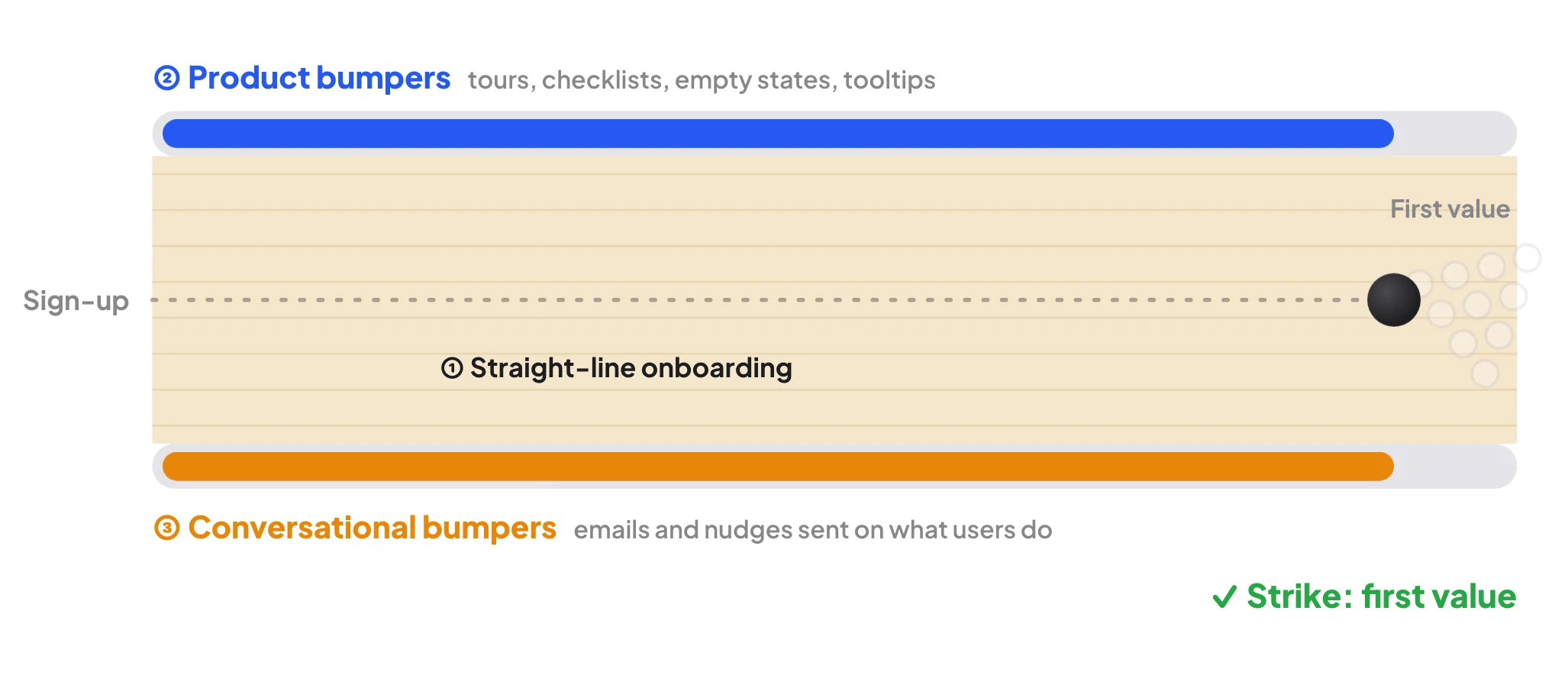
The Bowling Alley Framework
Straight-line onboarding is the shortest path from sign-up to first value. Product bumpers keep people on it inside the app. Conversational bumpers bring them back when they drift.
Part 2
Straight-line onboarding
Straight-line onboarding: three questions
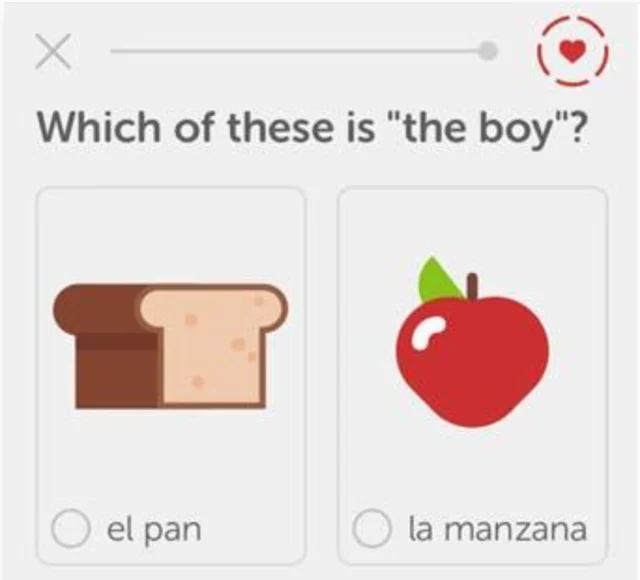
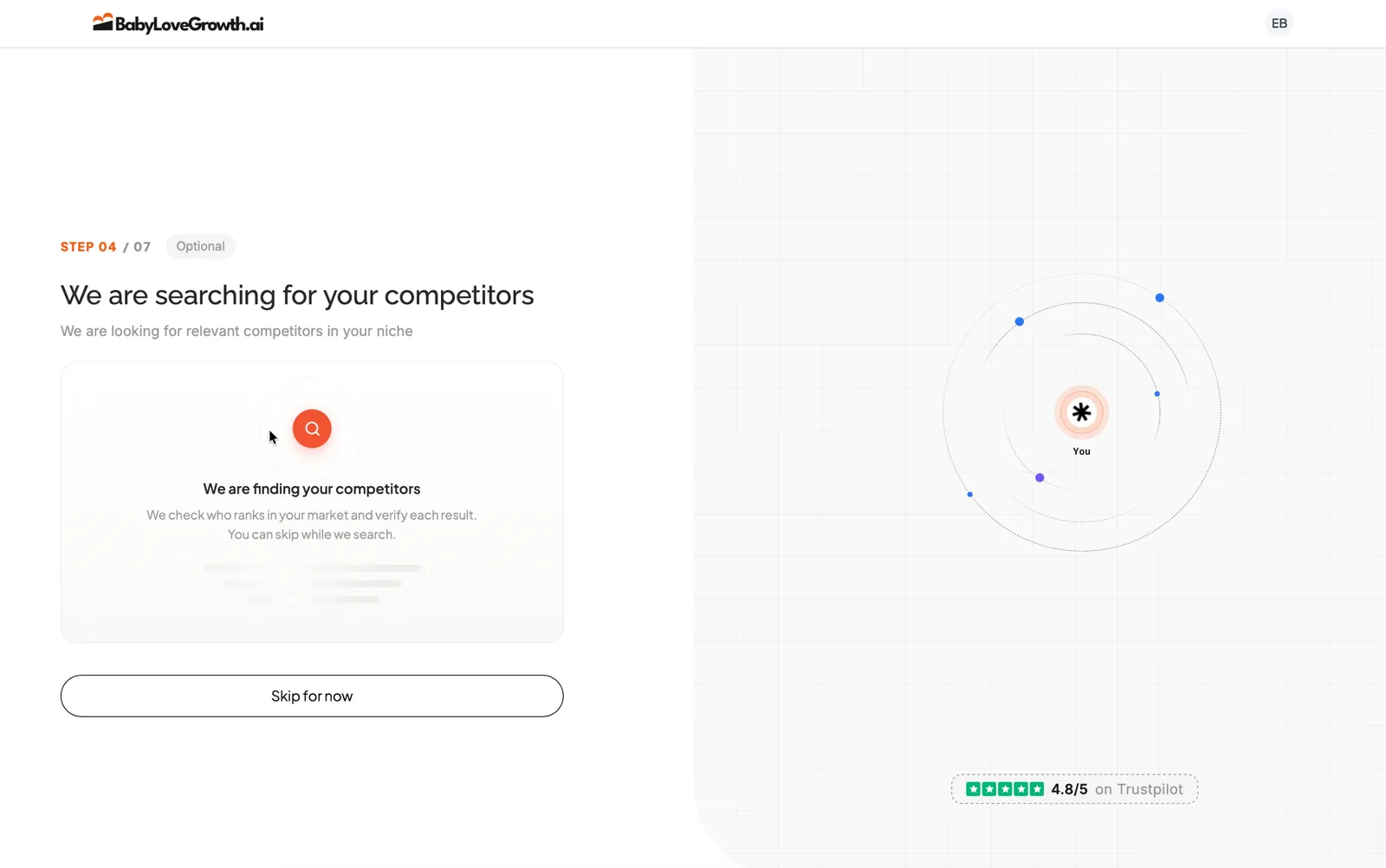
Simpler onboarding and less friction top Lenny’s Newsletter survey of what lifts activation, and teams often cut 20 to 75% of their steps this way. Ask three questions about every step: can we remove it, can it wait, or is it mission-critical? BabyLoveGrowth has an optional step in a 7-step wizard, Duolingo lets you finish a lesson before it asks for an account, and AiSDR can’t send anything without a mailbox.
- What can we remove?. If a step is optional, it’s a reason to quit. Either it matters or it goes. BabyLoveGrowth: step 4 of 7 is labelled “Optional”, and I’m still a quarter of an hour from my first article.
- What can wait?. Don’t onboard people to the whole product at once. Ask when it becomes relevant. Duolingo: you finish a whole lesson before it asks you to create an account. The account can wait, the first win can’t.
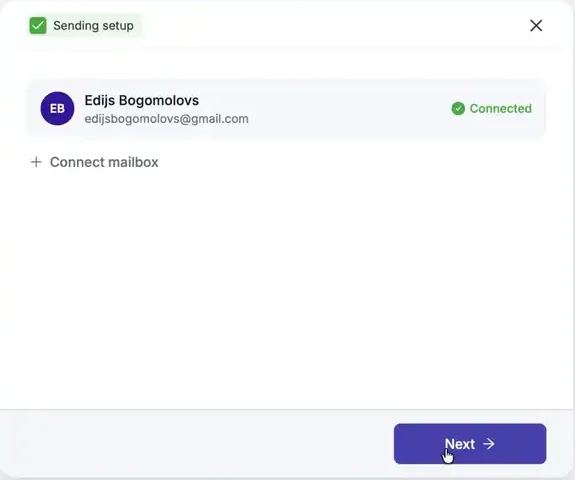
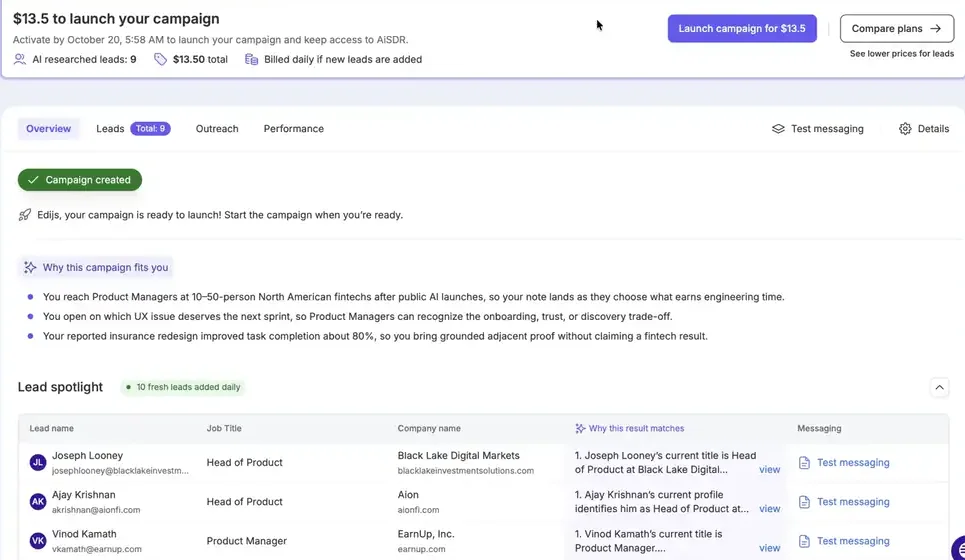
- What is mission-critical?. Some steps can’t move. Without them, the product doesn’t work at all. AiSDR: no connected mailbox, no campaign. Onboarding is built around getting the inbox connected first.
Remove what you can, delay what can wait, keep only what makes it work.
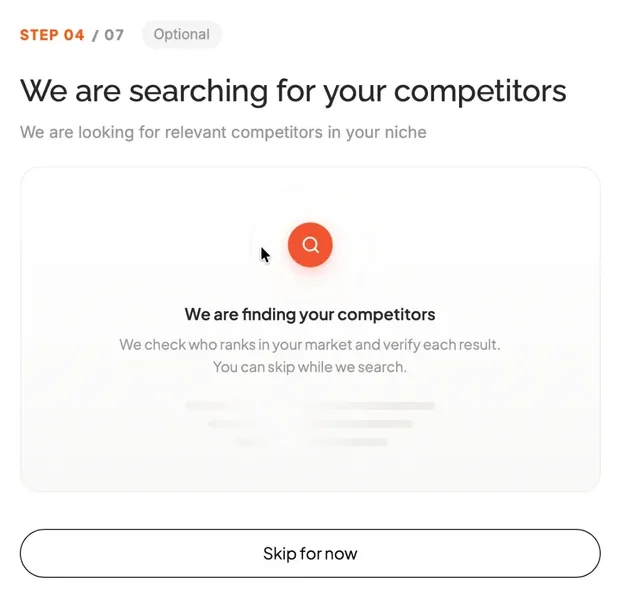
Step 4 of 7, and it says “Optional”. If it’s optional, why is it standing between me and my first article?
Part 2
Product bumpers
Product bumpers keep people on the lane
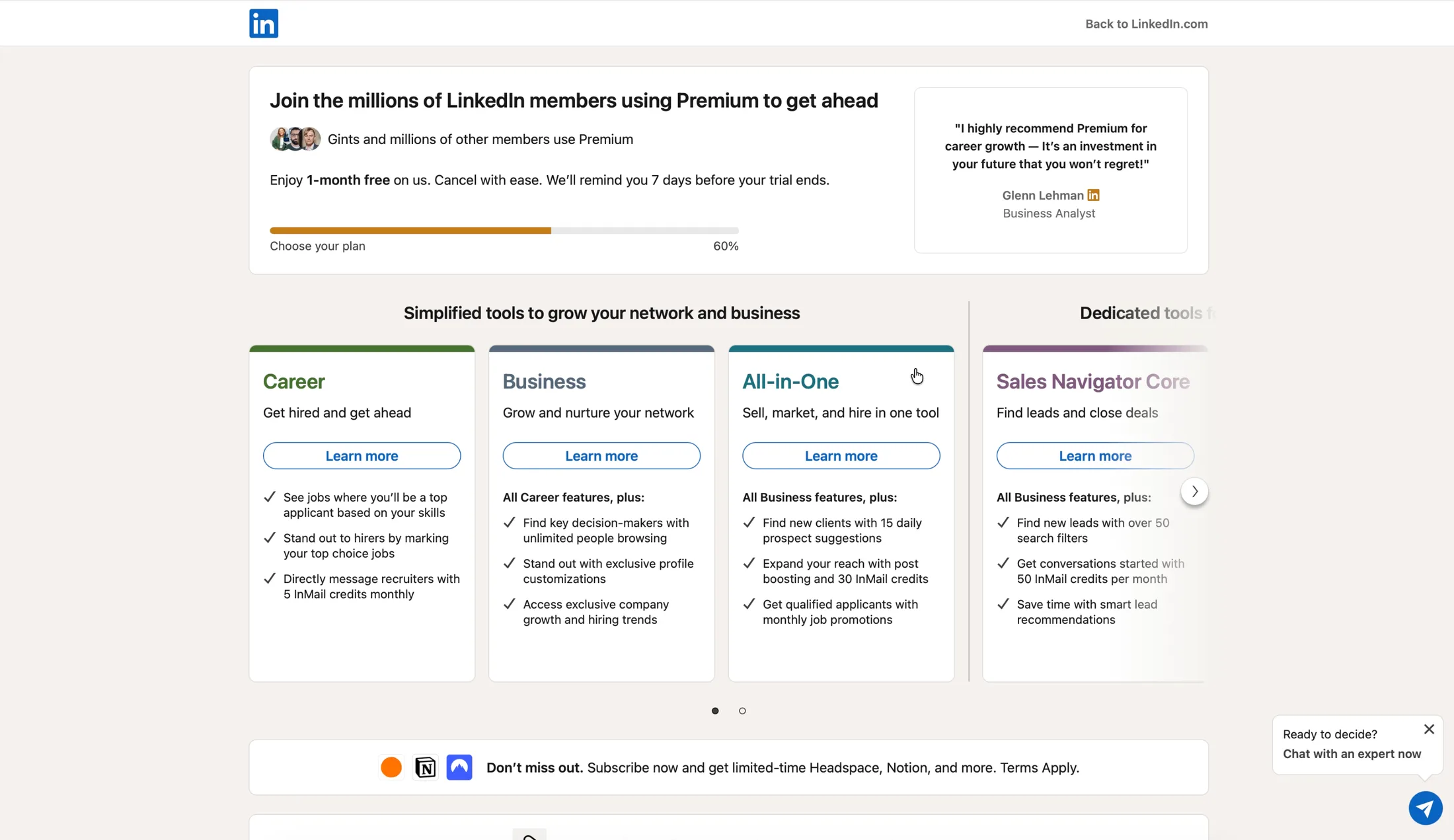
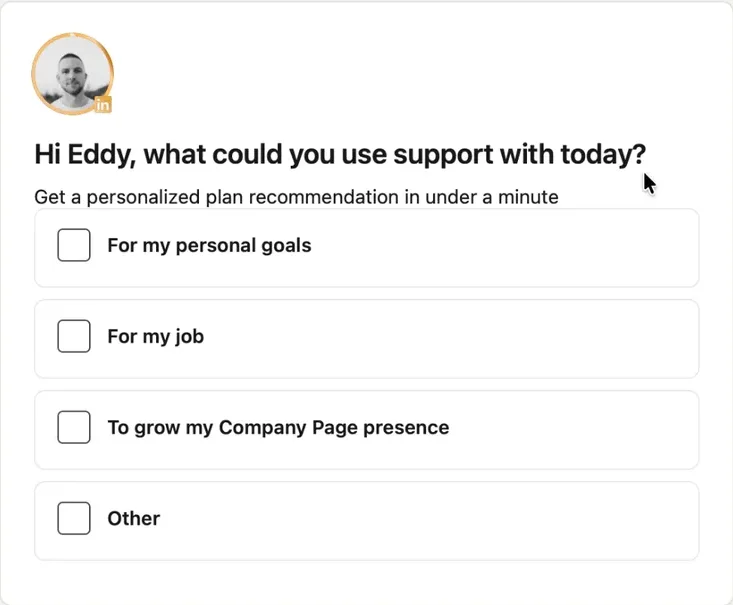
Product bumpers are in-app guidance: tours that start from the user’s goal, checklists of the critical steps, empty states that point to the next action, and a few well-placed tooltips. LinkedIn, BabyLoveGrowth and AiSDR each show one, done well or badly.
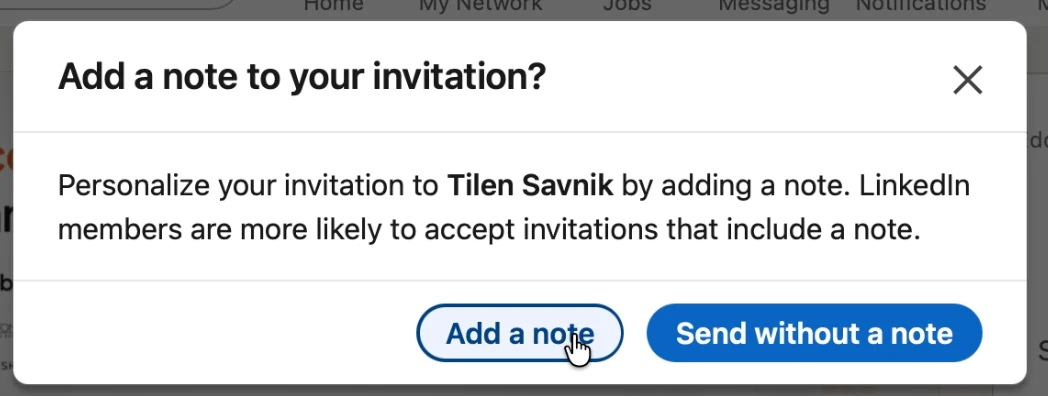
- Product tours. Ask what they want to do, then guide that one path. LinkedIn asks the right question, then recommends a plan instead of taking me back to the note I came to send.
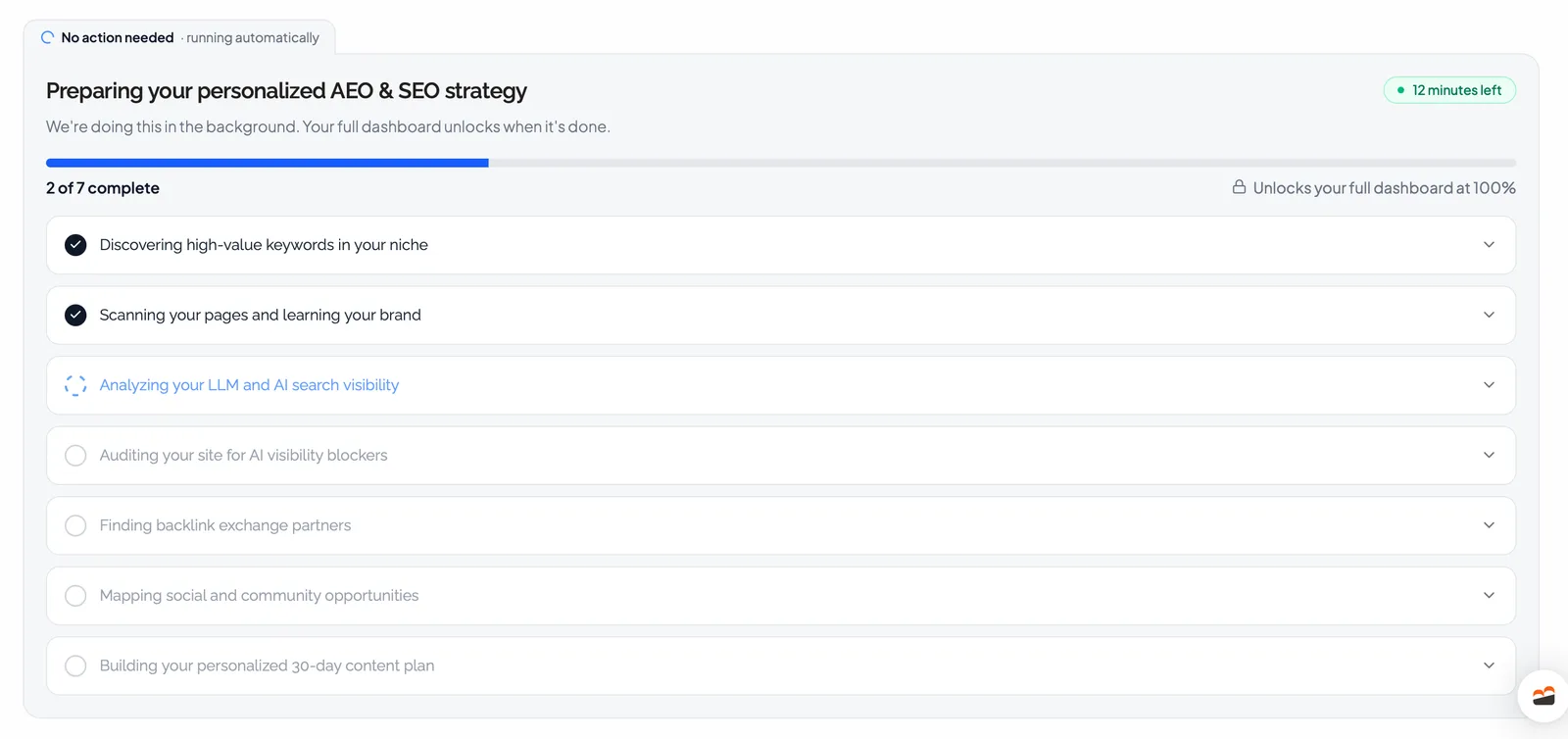
- Checklists. Show the critical steps and what’s already done. BabyLoveGrowth: 2 of 7 complete, 12 minutes left. I know where I am and what unlocks at the end.
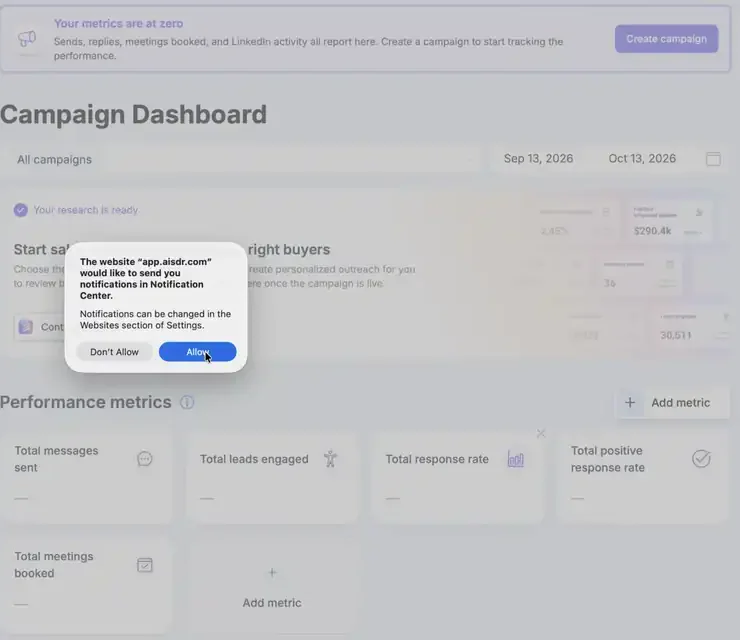
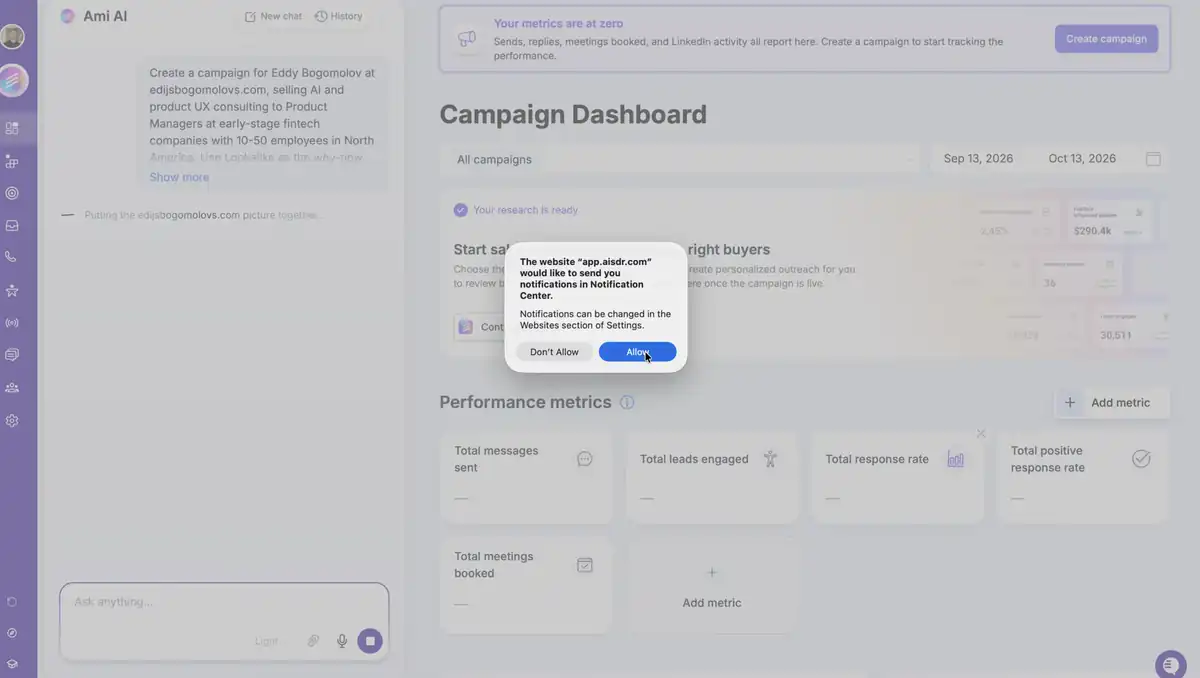
- Empty states. Turn a blank screen full of zeros into the next step. AiSDR: “Your metrics are at zero” while my leads are being found. Show the leads arriving instead.
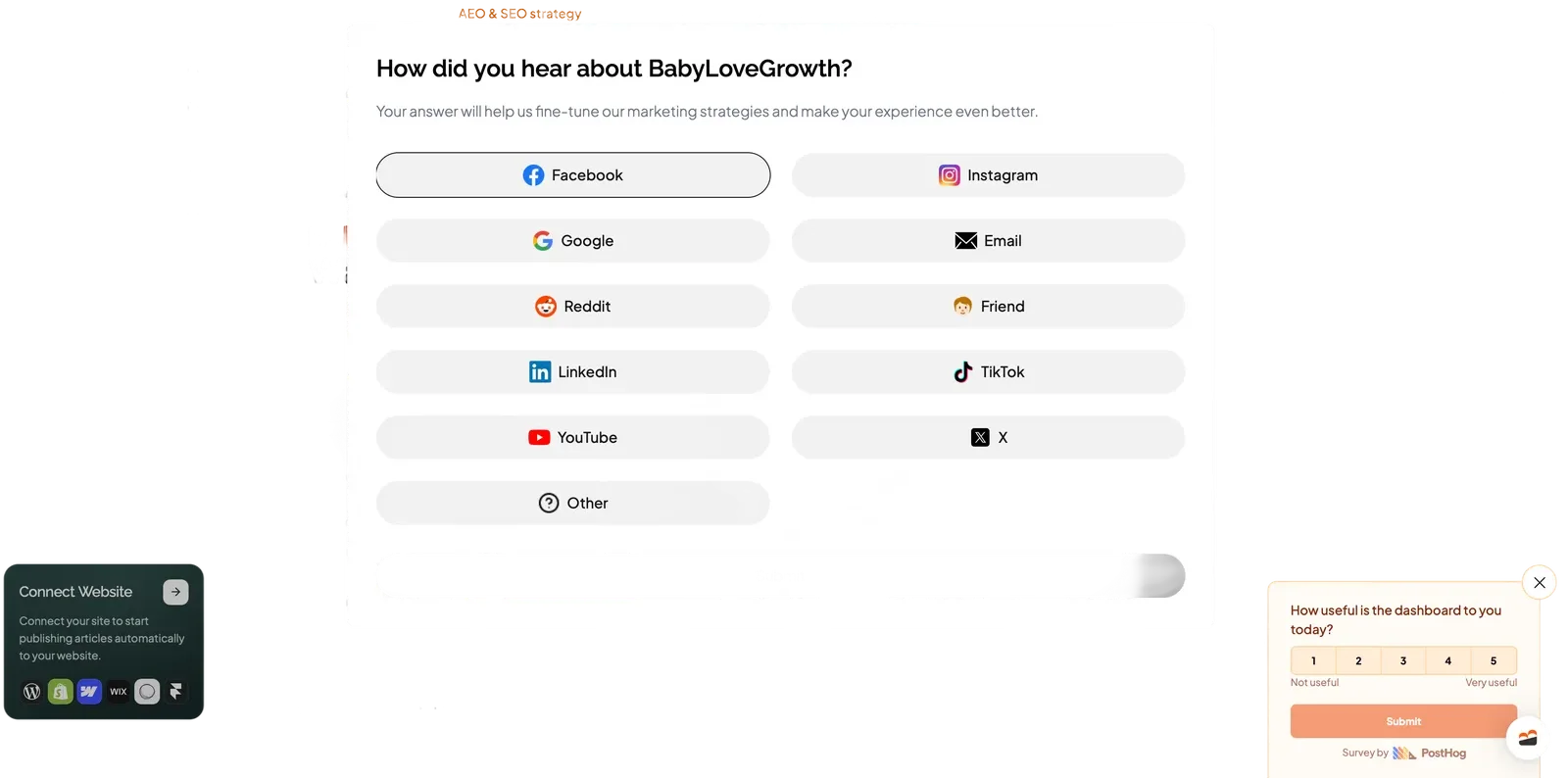
- Tooltips. Teach one idea at a time. Never whack-a-mole. BabyLoveGrowth: a survey, a rating widget and a connect prompt in my first minute. Three bumpers, zero guidance.
Bumpers don’t push people. They make the next step obvious.
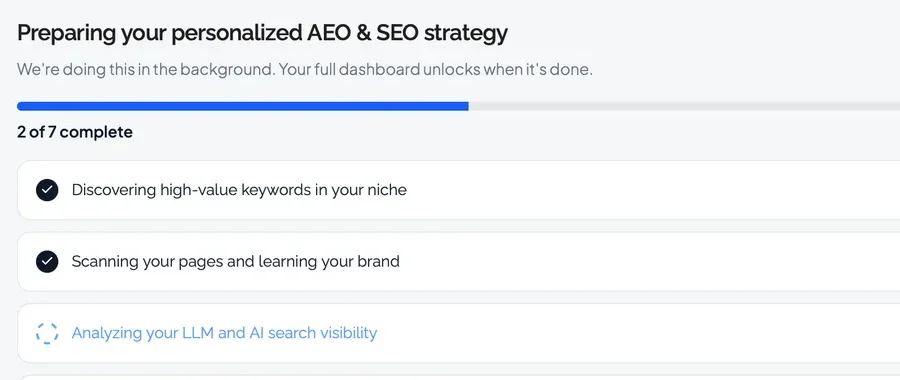
2 of 7 complete, 12 minutes left. Fine. I’ll wait, but only because I can see the bar move.
“Your metrics are at zero.” I know. I’ve been staring at them for nine minutes while the leads get found somewhere I can’t see.
Part 2
Conversational bumpers
Conversational bumpers: just in time
- Just in case: Day 1 email → Day 3 email → Day 7 email → Day 14 email
- Just in time: Signed up → first quick win → Stalled → usage tip → Quick win → outcome → Value felt → upgrade
Just-in-case emails go out on a schedule, whatever people do. Just-in-time emails react to signals. Wistia does it well: upload a video but never share it, and the next email shows you how (Wes Bush, ProductLed). As Hila Qu puts it: “It is product-led, not product-only” (Lenny’s Newsletter).
Four signals worth a message
Each just-in-time message answers a signal from the product. BabyLoveGrowth has an article I can’t publish yet. Duolingo writes only when I miss a day. BabyLoveGrowth’s first article going live is the result worth an email. LinkedIn asks for the upgrade the moment the free notes run out.
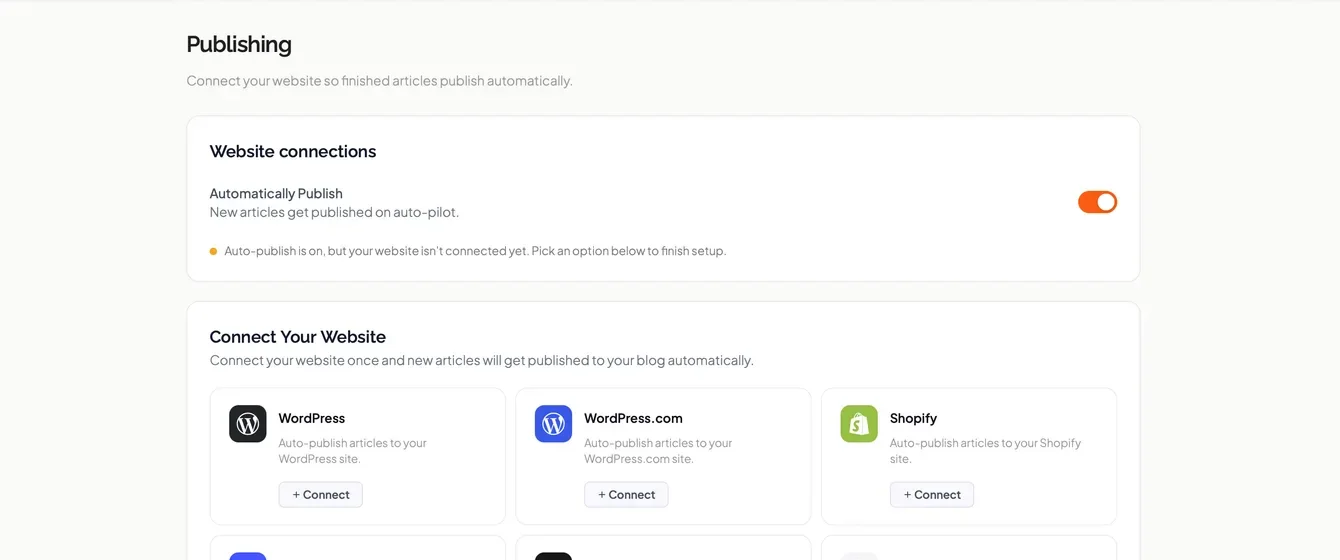
- Signed up, stuck. One step done, then nothing. Send the next step, not a welcome. BabyLoveGrowth: an article is ready but no site is connected. The email should say: connect your site, your article is waiting.
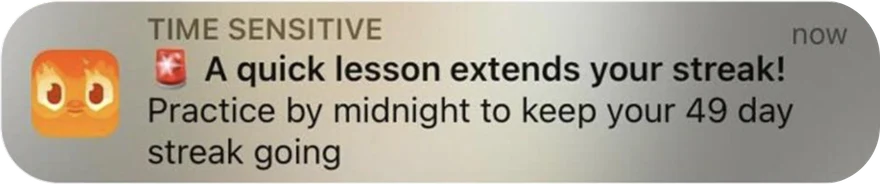
- Went quiet. A missed day is the signal. A nudge every day is noise. Duolingo’s owl writes when I miss a lesson, before midnight, with the streak as the reason to come back.
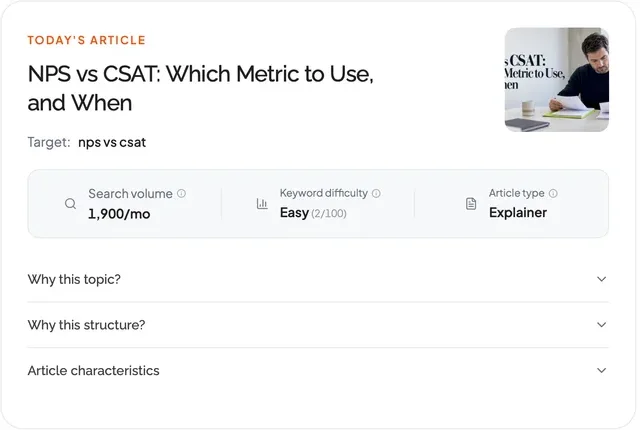
- Got a result. Show the outcome the product produced, the moment it happens. BabyLoveGrowth: today’s article is written and live on my blog. That is the one email I would actually open.
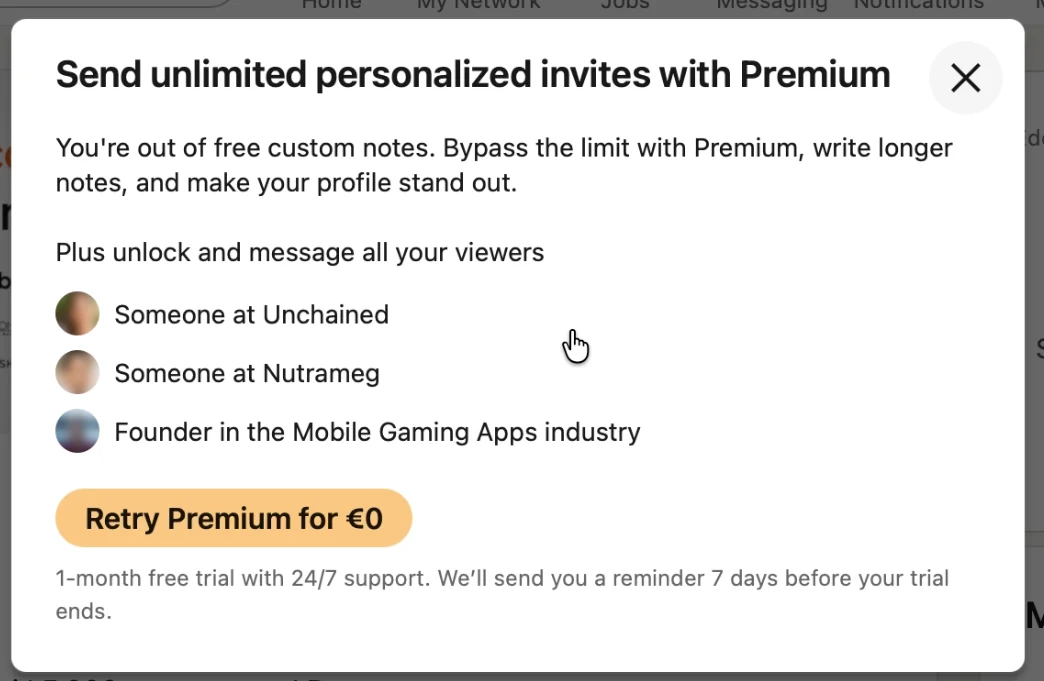
- Hit a limit. Ask for money when the free plan blocks a job they care about. LinkedIn asks mid-task, with a €0 trial. “The right contextual nudge to the right user at the exact moment of high intent” (Vikas Kansal, Google AI).
Send the message the signal asks for. Nothing else.
“You’re out of free custom notes.” Mid-sentence, with a €0 button right under it. I clicked. Of course I clicked.
“Practice by midnight to keep your 49 day streak going.” It’s 11:40 pm. I’m doing the lesson.

Part 2
Lenny’s survey
What moved activation, in the framework
| What teams said worked | Bowling alley piece |
|---|---|
| “Shorten steps” | Straight line: remove |
| “Removing login gate from initial app interactions” | Straight line: delay |
| “Less words to reduce friction to just start” | Straight line: keep only what works |
| “Personalized product tour depending on user’s goal” | Product bumper: tour |
| “Making smart recommendations/defaults” | Product bumper: empty state |
| Emails and follow-up comms | Conversational bumper |
Part 3
Applied
The framework, applied to my teardowns
Three real trials, one moment each where people fall out, and the bowling alley fix: AiSDR needs a product bumper during its 21-minute wait, BabyLoveGrowth and LinkedIn both need a straighter line to first value.
- AiSDR: the 21-minute wait. The leads are great. Getting there is a blank dashboard and a timer. Product bumper: show the leads as they’re found. Read the AiSDR teardown
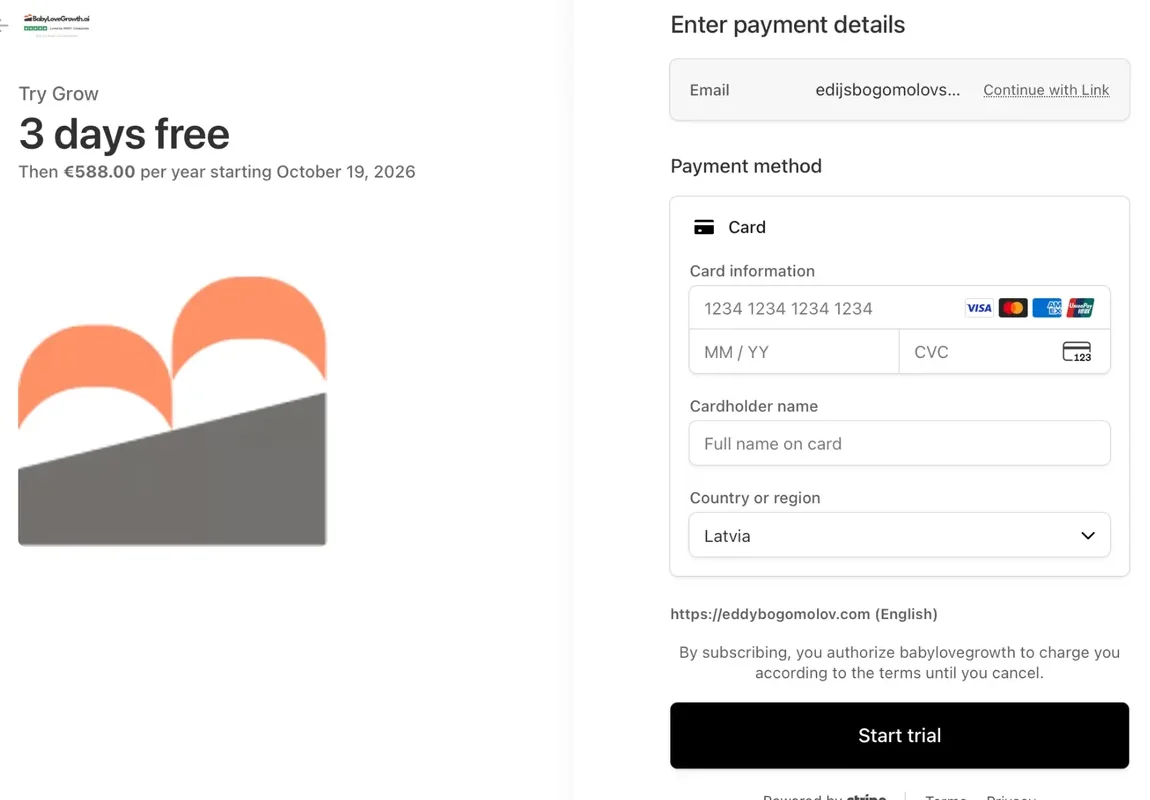
- BabyLoveGrowth: card first. A €588 card form stands between me and the first article. Straight line: delay the card until the first article exists. Read the teardown
- LinkedIn: the lost note. I came to send one note. The upgrade flow forgot that in four seconds. Straight line: skip the quiz, go back to the note. Read the LinkedIn teardown
Find where people fall out, then add a straight line or a bumper.
 LinkedIn
A perfect trial start, and everything after it works against the sale
LinkedIn’s paywall caught me mid-message and won the trial. Then a quiz, a plan picker, a €1,088 surprise and a security lock came before the first win. Where trial-to-paid is lost, screen by screen.
·6 min